
Table of Contents
- Why Door Damage Happens During Lockouts
- Safe Entry Techniques to Prevent Door Damage
- Preventative Maintenance to Avoid Future Lockouts
- Emergency Locksmith Availability: When to Call a Professional
- Cost of Locksmith vs. Door Repair: Making the Right Choice
- How to Choose a Reliable Locksmith for Safe Access
- Ask any locksmith these questions before hiring:
- Frequently Asked Questions
Last Updated: September 30, 2026
Why Door Damage Happens During Lockouts
Getting locked out is stressful. Your first instinct is often to force your way back in. That’s where damage starts.
Most people don’t realize how fragile a door frame actually is. A single hard kick or pry bar can splinter wood, crack the latch mechanism, or bend the strike plate permanently. Once that happens, the door won’t close properly or lock securely. Now you’re dealing with both a lockout AND a repair bill.
The real problem is time pressure. When you’re locked out, you feel urgency. That urgency leads to shortcuts. You grab whatever tool is nearby. You lean hard on the door. You try to force the lock instead of working with it. Each of these moves increases the chance of damage.
The good news: you can prevent door damage lockout with the right techniques and knowledge. This guide walks you through exactly how.
Safe Entry Techniques to Prevent Door Damage
When you’re locked out, your goal is to regain access without damaging the door, frame, or locking mechanism. The key is using methods designed specifically for non-destructive entry.
Professional locksmiths have tools and techniques that work with your door’s design, not against it. These methods are faster than forcing entry and leave everything intact.
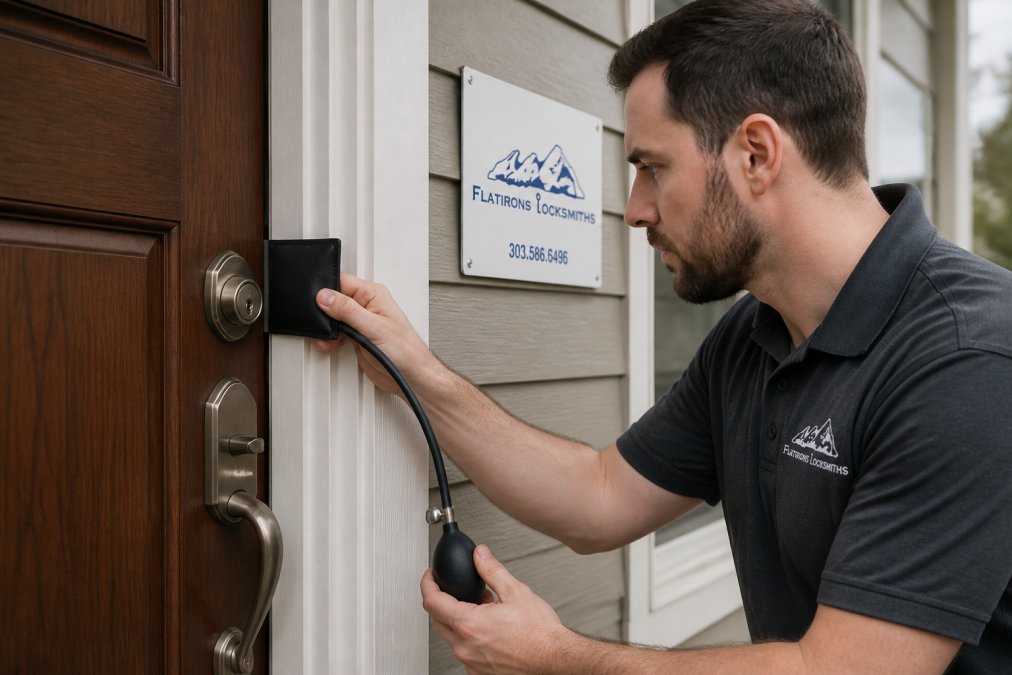
Using an Inflatable Wedge for Non-Destructive Entry
An inflatable wedge is one of the safest ways to prevent door damage during lockout. It’s a small, flat tool that slides into the gap between your door and frame.
Once positioned, you inflate it slowly. The wedge expands gently, creating just enough space to access the latch or deadbolt. No prying. No force. The door and frame stay intact.
The technique works on most residential doors:
- Slide the wedge into the top corner of the door gap
- Inflate it gradually using the attached hand pump
- Work slowly to avoid sudden pressure
- Stop when you have enough space to reach the lock
The advantage is clear: you control the pressure. You can stop at any point. The inflatable wedge distributes force evenly instead of concentrating it on one spot like a pry bar would.
Accessing Emergency Release Mechanisms Safely
Many doors have emergency release mechanisms built in. Understanding where they are and how to use them prevents unnecessary damage.
Exterior doors often have a small hole or slot near the lock. This is designed for emergency access. A thin tool, sometimes just a straightened paperclip, can trigger the latch from the outside.
Interior doors frequently have a push-button lock on the inside of the knob. If you’re locked in, you can usually push the button to release it. For exterior doors, the emergency release is typically hidden to prevent unauthorized access, but a professional locksmith knows exactly where to look.
The key is knowing your door type before you’re locked out. Walk around your home and identify which doors have these features. Mark them mentally or write them down. When lockout happens, you’ll know what options you have.
Material-Specific Damage Prevention
Different door materials require different approaches. Using the wrong technique on the wrong material causes expensive damage.
Wood doors are the most vulnerable. They splinter easily under pressure. Never use a pry bar or hammer on a wood door. The inflatable wedge method works best here. If that’s not an option, call a professional.
Metal doors are more durable but can still be dented or bent. The latch mechanism inside can jam if forced. Avoid impact tools entirely. Focus on accessing the keyway or emergency release instead.
Fiberglass doors sit in the middle. They won’t splinter like wood, but they can crack. The frame around a fiberglass door is often the weak point. Pressure on the frame causes more damage than pressure on the door itself. Protect the frame by using a wedge or shim to distribute pressure evenly.
Door frames are critical. A bent or cracked frame is harder to fix than a bent door. When using any entry technique, focus your effort on the latch area, not the frame. Never apply pressure to the hinges or the top corners where the frame is weakest.
Preventative Maintenance to Avoid Future Lockouts
The best way to prevent door damage during lockout is to avoid lockouts altogether. Preventative maintenance keeps your locks working smoothly and reduces the chance of getting stuck outside.
Lock and Latch Lubrication
A dry lock is a stuck lock. Over time, dust and debris accumulate inside the keyway and latch mechanism. Friction builds up. Eventually, the lock becomes sluggish or stops working.
Regular lubrication keeps everything moving freely. Use a silicone-based lubricant or graphite lubricant designed for locks. Spray it into the keyway and around the latch. Operate the lock several times to work the lubricant in.
Do this twice a year, or more often in dusty or humid climates. It takes five minutes and costs almost nothing. The payoff is huge: a well-lubricated lock is less likely to jam, and you’re less likely to get locked out.
Avoid WD-40 or general-purpose oils. They attract dust and gum up over time. Stick with products made specifically for locks.
Hardware Inspection for Wear and Tear
Worn hardware fails without warning. A loose bolt on the strike plate can cause the latch to miss the hole. A bent bolt throw might not catch properly. These small issues lead to lockouts.
Inspect your locks and door hardware every few months:
- Check all bolts and screws on the strike plate
- Look for rust or corrosion on metal parts
- Test the bolt throw by locking and unlocking several times
- Feel for resistance or grinding sounds
- Examine the door frame for cracks or splits around the strike plate
Tighten any loose bolts. Replace corroded hardware. If the bolt throw feels rough or doesn’t extend fully, the latch mechanism may need adjustment or replacement.
Small repairs now prevent bigger problems later.
Spare Key Management and Smart Lock Lockout Prevention
A spare key is your best insurance against lockout. Keep it somewhere accessible but secure.
Common options:
- Give a spare to a trusted neighbor or family member
- Store a spare in a locked box at home (not outside where thieves can find it)
- Use a keypad entry system as a backup to your main lock
- Install a smart lock with multiple access methods
Emergency Locksmith Availability: When to Call a Professional
Some lockouts require professional help. Knowing when to call saves time, money, and frustration.
Call a professional locksmith if:
- Your door is damaged or the frame is cracked
- The lock is broken or jammed inside
- You’re locked out of a rental property (landlord may require a professional)
- You’ve already attempted entry and caused damage
- You’re locked out of a commercial property with security concerns
- You need to prevent door damage lockout and don’t have the right tools
Cost of Locksmith vs. Door Repair: Making the Right Choice
When you’re locked out, you face a decision: try to get in yourself, or call a professional.
How to Choose a Reliable Locksmith for Safe Access
Not all locksmiths are equal. Choosing the right one matters.
Look for these qualities:
- Member of professional associations like ALOA Security Professionals Association
- Authorized dealer for quality hardware brands
- Upfront pricing before work begins (no surprises)
- Local business with good reviews and references
- Available for emergency calls when you need them
Ask any locksmith these questions before hiring:
- Where are you located? (This is very important because if they advertise in many locations they won’t be able to answer this because they don’t know where you are calling from and that will tell you if they are local or not. Many companies advertise all over the country and have people in those areas that they hire to do their work, if you are calling one of those call centers then this question helps you identify that))
- What’s your pricing for a standard lockout? Most legit companies have a rate structure and can give that to you when you ask. If they can’t give you a final price or they only give you a starting price you can bet it will go through the roof when they get out to you. So many people avoid a real rate quote and opt for something that sounds good over the phone only to get a nasty surprise when the “technician” gives them the bill with a mound of excuses why the service is not the low “starting” price they were given over the phone.
- Can you come today if it’s an emergency? This is important because so many locksmiths get busy. Believe it or not we are not usually sitting by the phone waiting for you to call, we service a lot of companies and individuals and can sometimes be quite booked up and can’t get a locksmith to you. If this occurs we will try to recommend another good locksmith that can help you.
- What happens if something gets damaged? A lock is supposed to be opened with a key so when you are unlocking it with something other than the key that was meant to unlock it things can happen. While most of the time we can unlock things without damage there are times that require destructive means to get a door open.
A trustworthy locksmith answers these questions clearly and honestly.
|
Scenario |
Best Approach |
Why It Works |
|---|---|---|
|
Simple residential lockout |
Inflatable wedge or emergency release |
Non-destructive, fast, requires minimal tools |
|
Damaged or jammed lock |
Professional locksmith |
Requires specialized equipment and expertise |
|
Rental property lockout |
Professional locksmith |
Landlord often requires professional verification |
|
Locked out at night |
24/7 emergency locksmith service |
Immediate access, professional safety standards |
|
Preventative security |
Spare key + smart lock backup |
Multiple access methods reduce lockout risk |
Frequently Asked Questions
Can a locksmith open a door without causing damage?
Yes, professional locksmiths use specialized techniques like inflatable wedges, tension tools, and emergency release mechanisms to prevent door damage during lockout situations. Non-destructive entry methods protect your door frame, latch mechanism, and security hardware. However, success depends on the lock type and door condition. Attempting DIY entry with improper tools carries significant risk of structural damage to the door jamb and frame.
How can I prevent future lockouts without compromising security?
Implement a spare key management system by storing a copy with a trusted neighbor or family member. Install a keypad deadbolt or smart lock with backup access codes. Maintain your locking mechanism through regular lubrication with silicone-based or graphite lubricant to prevent jamming. Schedule preventative maintenance inspections annually to check for wear and tear on hinges, bolt throw, and door frame integrity. These measures reduce lockout frequency while maintaining security.
What’s the difference between calling a locksmith versus attempting DIY entry?
Professional locksmiths carry proper tools designed for non-destructive entry and understand how to assess door frame integrity, material composition, and locking mechanisms without causing damage. DIY attempts with improvised tools like credit cards or screwdrivers risk damaging the door jamb, latch mechanism, weather stripping, and hinges. Professionals complete entry faster and safely. The cost of locksmith services can be less than repairing structural damage to your door, frame, or security hardware.
How do I know if my door frame can withstand entry attempts?
Inspect your door frame for existing damage, rust, or loose hinges before a lockout occurs. Check that the door sweep and weather stripping are intact and properly sealed. Ensure hinge alignment is correct and bolts have adequate throw depth. If your door frame shows signs of wear and tear, water damage, or structural issues, inform your locksmith immediately so they can adjust their entry technique accordingly. Weakened frames require extra care to prevent collapse during access.