
Table of Contents
- Assess the Broken Key Before You Touch Anything
- How to Remove a Broken Key From a Lock: 4 Methods
- When to Use a Broken Key Extractor Tool
- Mistakes That Push the Key Fragment Deeper
- Locksmith Broken Key Removal: When to Call a Pro
- Cost to Remove a Broken Key From a Lock
- Aftercare, Prevention, and When to Replace the Lock
- Frequently Asked Questions
Last Updated: October 19, 2026
Assess the Broken Key Before You Touch Anything
A broken key in a lock is a problem you can usually fix in minutes, but only if you slow down first. The fragment tells you what to do next.
Look before you reach for a tool. Two questions decide your whole approach.
Is Any Part of the Key Sticking Out?
A protruding fragment is the easy case. If you can see and grip part of the key, you have options: tweezers, needle-nose pliers, or a small extractor tool.
If nothing sticks out, stop. A flush fragment sits below the face of the lock cylinder, and most home tools will just push it deeper.
Check with a flashlight at eye level. Look straight into the keyway, not at an angle.
Is the Key Flush or Deeply Lodged?
A flush fragment sits level with the lock face. A deeply lodged fragment has broken off further inside the keyway, past the pins.
- Protruding: grip and pull gently.
- Flush: use a broken-key extractor tool, not pliers.
- Deeply lodged: call a locksmith. The risk of cylinder damage is too high.
Pushing a flush fragment with a screwdriver is the most common way a simple break becomes a full cylinder replacement. Once the piece jams against the pins, no home tool will get it out.
How to Remove a Broken Key From a Lock: 4 Methods
Here is how to remove a broken key from a lock, ranked from safest to riskiest. Try them in order. Stop the moment one works. The right method depends on two things: how much of the fragment is exposed, and what kind of lock it is.
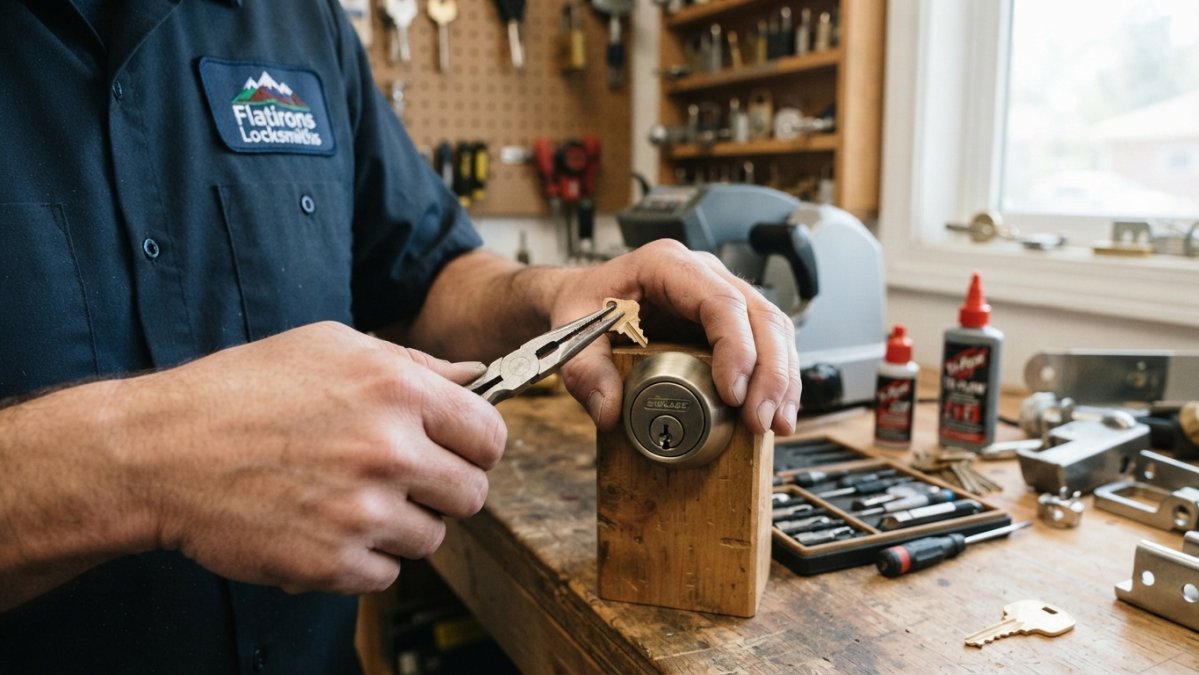
Method 1: Tweezers and Needle-Nose Pliers
This is the first thing to try when the fragment protrudes. The goal is a firm grip with zero forward pressure.
- Spray a little lock lubricant into the keyway and wait a minute.
- Open the tweezers or pliers wide and slide in alongside the fragment.
- Clamp down on the exposed edge. Do not squeeze the lock face.
- Pull straight out, slowly, with steady pressure.
If the tool slips, reset. Jerking the pliers is how fragments snap a second time. On a deadbolt, brace the door so it cannot swing while you pull; movement changes the angle and lets the fragment bind.
Method 2: A Broken-Key Extractor Tool
A broken-key extractor is a slim steel pick with a hooked or barbed tip, made to reach flush fragments. It is the correct tool when pliers cannot get a grip.
- Confirm the fragment is flush or only slightly recessed.
- Slide the extractor along the top of the keyway until the hook passes the fragment’s teeth.
- Rotate gently to catch the teeth, then pull straight out.
- If it does not catch in two or three tries, stop. Repeated scraping scores the cylinder walls.
Extractors work well in padlocks and door cylinders. They are less reliable in vehicle ignitions, where the keyway is tighter and the fragment often sits behind the ignition pins.
Method 3: Improvised Tools (Screwdriver, Fish Hook, Paper Clip)
No pliers or extractor on hand? A thin flathead screwdriver, a fish hook with the barb filed down, or a stiff paper clip bent into a hook can work on a protruding piece.
Slide the tool in beside the fragment, not behind it. Hook the edge and draw it out at the same angle the key went in. This method takes patience and carries real risk of scoring the cylinder walls. Do not use it on a flush fragment.
Coat the tip of your improvised tool in a dab of grease. The fragment often sticks to the tool and rides out on its own.
Method 4: Locksmith Extraction (When DIY Stops Being Safe)
A locksmith uses professional extraction picks, light and magnification, and sometimes a borescope to see inside the keyway. This is the right call when the fragment is deeply lodged, when the door is locked and you are shut out, or when the lock is a high-security cylinder that punishes improvisation.
Match the Method to the Lock
- Deadbolt or knob lock: Methods 1 through 3 usually work if any part protrudes. If the door is locked, keep the door closed and work from the accessible side; do not cycle the bolt.
- Padlock: Clamp the shackle in a vise or hold it steady, then use tweezers or an extractor. Padlock keyways are often more exposed, which helps.
- Vehicle lock or ignition: Stop after Method 1. Ignition cylinders are expensive and tightly toleranced; a wrong tool can turn a $150 repair into a $600 one. Call a locksmith or dealership.
- High-security cylinder: Keys with side bars, dimples, or restricted keyways often cannot be extracted with home tools without damage. Go to Method 4.
If the fragment is flush with the face of the cylinder, skip Methods 1 and 3. Pliers and screwdrivers push flush fragments deeper into the pins, which is the most common way a simple break becomes a full cylinder replacement.
When to Use a Broken Key Extractor Tool
A broken key extractor tool is a slim steel pick with a hooked or barbed tip, made to reach flush fragments. It costs little and works where pliers cannot.
Use one when:
- The fragment is flush with the lock face
- Pliers cannot get a grip
- The key broke off inside a padlock or car door
Slide the extractor along the top of the keyway, hook the fragment’s teeth, and pull slowly. Most hardware stores and online retailers carry these tools.
For deeper breaks, a locksmith carries professional extraction sets. The ALOA Security Professionals Association sets training standards for the technicians who use them.
Mistakes That Push the Key Fragment Deeper
The biggest danger is not the broken key. It is the tool you reach for next.
- Pushing with a screwdriver. Forward force drives the fragment into the pins.
- Using superglue. It bonds to the cylinder, not just the key.
- Shaking or slamming the door. Vibration seats the piece deeper.
- Ignoring a stiff lock. A stiff lock usually means a worn key or dry cylinder. That is what caused the break.
- Forcing the other half. Never insert the broken-off key head to “twist it out.”
If the lock was already stiff before the key snapped, the cylinder needs attention too. Lubricant and a fresh key solve most of these cases.
Locksmith Broken Key Removal: When to Call a Pro
Call a locksmith when the fragment is flush, deeply lodged, or stuck in a car ignition. Locksmith broken key removal uses extraction picks and borescopes to see inside the keyway.
It also protects the lock. A damaged cylinder can cost far more than a service call.
Flatirons Locksmiths has served the north metro area since 2012, and our team handles broken keys in door locks, padlocks, and ignitions. We quote upfront before any work starts, so there are no surprises.
If you cannot see the fragment, do not touch it. A locksmith with the right extractor solves a flush break in minutes; a wrong tool turns it into a cylinder replacement.
Cost to Remove a Broken Key From a Lock
The cost to remove a broken key from a lock depends on where the fragment sits, what kind of lock it is, and whether the door is locked. A protruding piece is quick work. A flush or deeply lodged fragment takes more time and tools.
What Drives the Price
- Fragment position. Protruding fragments are the cheapest extraction. Flush and deeply lodged fragments take longer and may require a borescope.
- Lock type. A standard residential door cylinder is simpler than a car ignition, a commercial panic bar, or a high-security cylinder.
- Time and urgency. After-hours, weekend, and emergency lockout calls carry premiums. A scheduled daytime visit is the least expensive option.
- Outcome. If the cylinder is damaged during extraction, the job becomes a replacement, not a removal.
Typical Price Ranges
Most residential locksmiths charge a service call or trip fee plus labor for the extraction. Emergency and after-hours calls commonly run higher. Vehicle and ignition extraction tends to cost more than a door lock because of the tighter tolerances and the risk of damage.
These are ranges, not quotes. Ask for the trip fee, the extraction labor, and the replacement cost of the cylinder before you authorize work. A reputable locksmith will give you all three up front.
Extract or Replace?
Extraction is usually cheaper than replacement, but not always the better value. Replace the cylinder instead of extracting when:
- The keyway is already scored, bent, or damaged
- The same lock has broken a key before
- The lock is old and the pins are worn
- The cylinder is a low-cost builder-grade unit that costs less to replace than to service
What to Ask Before You Book
- Is the trip fee separate from the labor?
- Is the quote for extraction only, or does it include a replacement if extraction fails?
- Are there after-hours or weekend charges?
- Will you show the price in writing before starting?
At Flatirons Locksmiths, we give an upfront quote before work begins. Call or book online and we will confirm the price for your situation. For general consumer protection guidance on service pricing, see the FTC consumer advice.
Get the trip fee, the extraction labor, and the replacement cost in writing before anyone touches the lock. The cheapest quote is not always the lowest final bill.
Aftercare, Prevention, and When to Replace the Lock
Once the fragment is out, test the lock with a spare key. If it turns smoothly, you are done.
Replace the lock or cylinder when:
- The keyway is scored or bent
- Keys stick repeatedly
- The lock is old and the pins are worn
- The same key has broken before
Prevention is simple. Lubricate the cylinder once or twice a year with a graphite or silicone lock lubricant.
A worn key is the leading cause of snapped keys. If your key looks shiny and thin at the tip, cut a new one.
Flatirons Locksmiths also installs electronic deadbolts and smart locks for homeowners.
Frequently Asked Questions
Can you remove a broken key from a lock yourself?
Yes, if part of the key is sticking out of the keyway. Grip the protruding fragment with needle-nose pliers or tweezers and pull it straight out slowly. If the fragment is flush with the lock face or lodged deep inside the cylinder, stop and call a locksmith. Poking around with improvised tools can push the piece further in and damage the lock cylinder, which turns a simple extraction into a full lock replacement.
How much does it cost to get a broken key out of a lock?
The cost to remove a broken key from a lock depends on the lock type, how deep the fragment sits, and whether it is a standard deadbolt or a commercial cylinder. A straightforward extraction usually costs less than replacing the lock. Flatirons Locksmiths provides upfront quotes before any work begins, so you know the price before a technician starts. Contact them for a current quote based on your specific lock.
Can a magnet pull a broken key out of a lock?
No. Most house and car keys are made of brass or nickel-plated brass, which are not magnetic. Even steel keys rarely respond to a household magnet strongly enough to slide a lodged fragment out of a keyway. Trying a magnet wastes time and risks nothing worse than a scratched lock face, but it will not solve the problem. Use pliers, tweezers, or a broken key extractor tool instead.
Can a broken key damage a lock?
Yes. A broken key fragment jammed in the keyway can bend the pins, scratch the cylinder, or block the plug from turning. Forcing a second key in behind it often causes more damage than the original break. If the lock feels stiff or gritty after extraction, have a locksmith inspect the cylinder. In some cases the lock needs rekeying or replacement, especially on commercial doors where a jammed latch creates a security risk.
A broken key is stressful, but it rarely means a new lock. The right first move is a slow look, not a fast tool. When the fragment is flush or the lock is already damaged, call Flatirons Locksmiths. Our mobile technicians bring the right extractors, quote upfront, and can rekey or replace the cylinder on the same visit. Schedule an appointment and get your door working again.