
Table of Contents
- Immediate Steps When Your Key Breaks Inside the Lock
- Tools You’ll Need for Broken Key Extraction
- How to Remove a Broken Key From a Lock With Pliers
- Lubrication Methods for Stuck Keys and Lock Cylinders
- Cost of Broken Key Extraction and When to Call a Professional
- Emergency Locksmith Availability for Broken Key Removal
- Assessing Lock Damage After Key Fragment Removal
- Common Mistakes to Avoid When Extracting a Broken Key
- Frequently Asked Questions
Last Updated: September 27, 2026
Immediate Steps When Your Key Breaks Inside the Lock
When a key breaks in lock situations occur, it’s stressful, but the right approach prevents further damage. Stop trying to force anything, pushing or wiggling can snap off more fragments or push pieces deeper into the lock mechanism.
Assess what you’re dealing with. If part of the key protrudes from the keyway, you may be able to remove it yourself. If the break is flush with the lock or deeper inside, professional extraction is likely necessary.
Don’t apply lubricant yet, it can push fragments deeper into the lock cylinder. Keep the lock dry and accessible while you gather tools or contact a professional.
Document what happened: whether you were turning the key, if you heard a crack, and how much is visible. This helps a locksmith assess the situation.
Tools You’ll Need for Broken Key Extraction
Successful extraction requires the right tools. Having several options increases your chances of success.
Essential tools for DIY removal:
- Needle-nose pliers (small, fine-tipped)
- Tweezers (preferably metal with a fine point)
- Jigsaw blade or thin metal saw blade
- Graphite powder or dry lubricant (silicone spray as backup)
- Flashlight or headlamp for visibility
- Small magnifying glass (optional but helpful)
Needle-nose pliers grip protruding fragments; tweezers work for smaller pieces near the keyway opening. A jigsaw blade can push the key out or create a hook to pull it free. Graphite powder is the safest lubricant, it’s dry and won’t push fragments deeper. Good lighting is critical for working in a small space with tiny metal pieces.
How to Remove a Broken Key From a Lock With Pliers
Extraction technique varies by lock type. A standard deadbolt requires different handling than a car ignition or multipoint composite door lock. Understanding your lock type prevents damage.
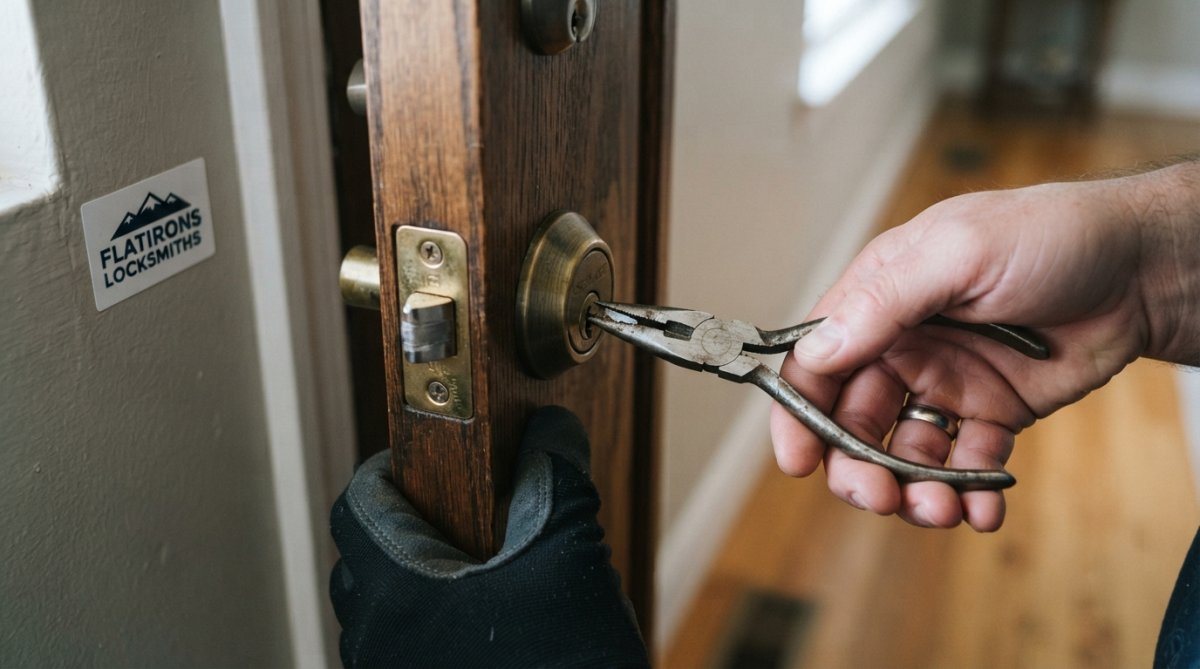
Deadbolt Locks (Residential Doors)
Deadbolts are the most forgiving for DIY extraction, the keyway is typically wide and accessible.
Needle-nose pliers technique for deadbolts:
Grip the fragment as close to the keyway opening as possible for maximum leverage. Apply steady, straight-out pressure, avoid twisting or angling, which can bend the fragment and prevent extraction.
Car Ignition Locks
Car ignition locks are tighter and more complex than residential deadbolts. The key must turn through multiple positions, and internal wafers are tighter. A broken fragment can wedge between wafers, and forcing extraction risks damaging the steering column lock mechanism.
Padlocks
Padlocks are accessible from multiple angles but have narrow keyways. If the fragment protrudes, needle-nose pliers work well when the padlock is stabilized in a vise. A jigsaw blade is often more effective, insert it alongside the fragment and use gentle leverage to push the key out.
Multipoint Composite Door Locks
Multipoint locking systems have complex, tightly packed internal components. Damage to one part can disable the entire system. If a key breaks in a multipoint lock, call a professional immediately, the risk of damaging the mechanism outweighs the service call cost. A locksmith can extract the key and assess the lock.
General Pliers Technique Across All Lock Types
Regardless of lock type, follow these principles:
- Grip close to the keyway. The closer your pliers grip to the lock opening, the better your control and the less stress on the lock cylinder.
- Pull straight out. Avoid twisting, angling, or wiggling. Straight-line extraction is gentler on internal components.
- Use steady pressure, not force. If the key doesn’t move after 10-15 seconds of steady pulling, stop. Continuing risks snapping the fragment or damaging the lock.
- Stop if you feel grinding or resistance. This indicates the fragment has caught on internal pins or springs. Forcing through resistance damages the lock mechanism permanently.
Lubrication Methods for Stuck Keys and Lock Cylinders
Let lubricant dry completely before using the lock. Test with your working key to confirm smooth operation. If the lock still feels stiff, professional assessment may be needed.
Cost of Broken Key Extraction and When to Call a Professional
Deciding whether to attempt DIY extraction or call a professional depends on the risk of lock damage, replacement cost, and urgency of access.
Professional Locksmith Costs
Professional broken key extraction costs vary, with emergency service (nights, weekends, holidays) typically incurring additional charges. Lock replacement costs also vary depending on the type of lock. Most locksmiths provide upfront quotes.
DIY Extraction Risk Assessment
DIY extraction is low-risk if: the key protrudes at least 1/4 inch, you have proper tools and can grip securely, the lock is a standard residential deadbolt, you have time to work carefully, and you understand when to stop.
Decision Framework: DIY vs. Professional
Choose DIY extraction if:
- Lock replacement cost is lower (low-value lock).
- The key fragment is clearly visible and accessible.
- You have the right tools and feel confident using them.
- You have time to work carefully without rushing.
- You can afford to replace the lock if extraction fails.
Choose professional extraction if:
- Lock replacement cost is higher (high-value lock).
- The key is not visible or is flush with the keyway.
- You’ve never attempted this before or feel uncertain about the process.
- The lock is on a door or vehicle you need access to immediately.
- The lock is a specialty type (car ignition, multipoint, high-security).
The Hidden Cost of Lock Damage
Damage during DIY extraction often goes unnoticed until the lock fails days or weeks later. Common damage includes:
- Bent or broken internal pins: The lock works initially but fails after a few uses. Replacement is the only fix.
- Damaged cylinder bore: The lock cylinder becomes loose or misaligned. Replacement required.
- Broken springs or wafers: Internal components fail, and the lock no longer holds a key. Replacement required.
Time Cost and Urgency
If you’re locked out of your home or car, the time cost of DIY extraction may exceed the professional service cost. Spending time attempting extraction when a locksmith can arrive quickly wastes time and increases stress.
When to Call Immediately
Do not attempt DIY extraction if:
- You’re locked out and need access within the next few hours.
- The key is completely inside the lock with no visible portion.
- You’ve already attempted extraction and the fragment is now deeper or bent.
- The lock is on a door or vehicle you depend on for daily access.
- You feel any grinding, resistance, or unusual sensation when attempting extraction.
Call a professional locksmith immediately in these scenarios. Same-day service is available, and the cost is worth the certainty that your lock will be restored without damage.
Emergency Locksmith Availability for Broken Key Removal
Emergency locksmith services operate around the clock to handle urgent situations. Flatirons Locksmiths provides emergency service for broken key extraction with same-day response and mobile service to your location.
Assessing Lock Damage After Key Fragment Removal
After extraction, test the lock with a working key, it should move freely without grinding. Inspect the keyway for deep gouges or visible debris, and check that the cylinder sits flush. Some locks recover completely; others have bent pins or damaged springs requiring professional assessment. Flatirons Locksmiths can evaluate your lock and recommend cleaning, adjustment, or replacement.
Common Mistakes to Avoid When Extracting a Broken Key
Learning what NOT to do prevents turning a simple extraction into a major lock problem. These mistakes happen frequently and often make the situation worse. Do not use any glue, many people have tried this and it never works out well for them. Do not do anything that could push the key in deeper to the lock cylinder, this makes extracting the key much harder.
Frequently Asked Questions
Why would a key break in a lock?
Keys break inside locks due to metal fatigue from repeated use, excessive force during insertion or turning, manufacturing defects, or damage from corrosion and rust. Older keys are more prone to breaking because the metal becomes brittle over time. Forcing a misaligned key or using a key that’s already damaged significantly increases the risk of snapping inside the lock cylinder.
How do I remove a snapped key from a lock safely?
Start by stopping any further force immediately—pushing harder will drive the fragment deeper. Use needle-nose pliers or a broken key extractor tool to grip the protruding portion of the key blade and pull straight out with steady, even pressure. If the fragment is flush with the keyway, apply graphite powder or silicone spray lubricant to reduce friction, then use tweezers or a jigsaw blade inserted alongside the key fragment to manipulate and extract it. Never use super glue or force.
Will a locksmith need to replace the entire lock if a key breaks?
Not necessarily. A professional locksmith can often remove the key fragment without damaging the lock cylinder or pin tumbler mechanism. Replacement is only required if the extraction process damages the internal lock components, the keyway is severely scratched, or the lock mechanism is compromised. After removal, the locksmith will inspect the lock cylinder and deadbolt to confirm functionality before you leave.
Is it safe to try and remove a broken key myself?
It can be safe if you follow proper technique and use the right tools, but mistakes can damage the lock permanently. Avoid pushing the fragment deeper, using excessive force, or applying super glue. If the key is flush with the keyway, deeply embedded, or if you’re uncertain about extraction, contact an emergency locksmith instead. Professional removal can be quick and may cost less than replacing a damaged lock.