
Table of Contents
- Emergency Locksmith vs Standard Locksmith Services: The Core Difference
- Same-Day Locksmith vs Emergency Locksmith: Which Do You Need?
- 24/7 Locksmith Availability and After-Hours Response
- House Lockout Locksmith: What to Expect at Your Door
- Locksmith Cost to Fix a Lock: What Drives the Price
- What to Do While You Wait for an Emergency Locksmith
- How to Vet a Locksmith Before You Book
- Conclusion
- Frequently Asked Questions
Last Updated: October 17, 2026
Emergency Locksmith vs Standard Locksmith Services: The Core Difference
An emergency locksmith responds to unplanned lockouts and urgent security failures, often within the hour, while a standard locksmith handles scheduled work like rekeying, hardware installation, and access control upgrades. The core difference comes down to dispatch priority, timing, and cost structure, not skill. At Flatirons Locksmiths, we run both service types from the same mobile fleet, and the calls look nothing alike.
Emergency work is reactive. You are locked out of your car at 11 p.m., or a warehouse door won’t latch before a shift starts. Standard work is planned: a new resident books a rekey, a shop owner schedules an electronic deadbolt install.
Emergency locksmith service is unscheduled, after-hours lock and key work dispatched to your location for immediate resolution. Standard locksmith service is scheduled work booked in advance at a normal rate.
That distinction shapes everything else: response time, what the technician brings, and what you pay. Below, we break down when each one makes sense, what drives the bill, and how to avoid the scams that give this trade a bad name.
Same-Day Locksmith vs Emergency Locksmith: Which Do You Need?
Same-day service means you get help today; emergency service means you get help now. Pick emergency only when you cannot secure the property or get moving without it. The table below compares the two service levels across the factors that actually affect your decision.
| Factor | Emergency Locksmith | Standard / Same-Day Locksmith |
|---|---|---|
| Availability | 24/7, including nights, weekends, holidays | Business hours, booked in advance |
| Dispatch priority | Immediate; on-call technician routed to you | Scheduled slot, often same or next day |
| Expected timing | Often within the hour, depending on distance | Appointment window you choose |
| Cost structure | Higher trip fee plus after-hours surcharge | Standard trip fee, no after-hours premium |
| Appointment flexibility | None, you call when it happens | You pick the day and time |
| Best for | Lockouts with no safe alternative, broken locks leaving property open, stranded vehicles | Rekeys, installs, upgrades, repairs on locks that still secure the door |
Here is the decision framework we give callers:
| Your Situation | Service Type | Why |
|---|---|---|
| Locked out, no spare key, unsafe to wait | Emergency | Dispatch priority, immediate response |
| Locked out with a safe place to wait | Same-day | Booked slot, standard rate |
| Lost car keys, vehicle stranded | Emergency | Mobile key service needed on site |
| Moving in, want locks rekeyed | Standard | Scheduled appointment |
| Broken lock that still secures the door | Same-day | Repair without after-hours premium |
| Broken lock leaving property open | Emergency | Security risk, urgent repair |
| Adding smart locks or access control | Standard | Planned installation |
The trap most people fall into is calling an emergency line for a job that could wait until morning. If you have a spare key at a neighbor’s house or a secure place to sit, a same-day appointment saves you the after-hours premium. If the door won’t lock and you’re leaving for work, that’s an emergency.
A second trap is assuming emergency service is always faster. If the on-call technician is across the metro and a shop-based competitor has a driver nearby, the scheduled same-day slot can sometimes arrive sooner. When you call, ask for an arrival window, not a vague “soon.”
24/7 Locksmith Availability and After-Hours Response
True 24/7 locksmith availability means a live dispatcher answers at 2 a.m. and a technician is actually on call, not a voicemail box that calls you back at 8. Ask point-blank: “Is someone dispatching right now?” The answer tells you whether you’re talking to a local shop or a lead-generation call center.
After-hours service carries a premium because the technician is giving up their night. That premium is legitimate. What isn’t legitimate is a quote that triples once the van arrives. Our rule is simple: the price quoted before dispatch is the price on the invoice.
Response time depends on dispatch priority and how far the on-call technician is from you. A mobile locksmith working your area can often arrive faster than a shop-based competitor routing a driver across the metro. When you call, ask for an arrival window, not a vague “soon.”
House Lockout Locksmith: What to Expect at Your Door
A house lockout locksmith arrives with mobile tools to open your door without damage, then verifies you belong there before touching the lock. Non-destructive entry is the standard: most residential lockouts open with picks, bump keys, or a lock-decoding tool, not a drill.
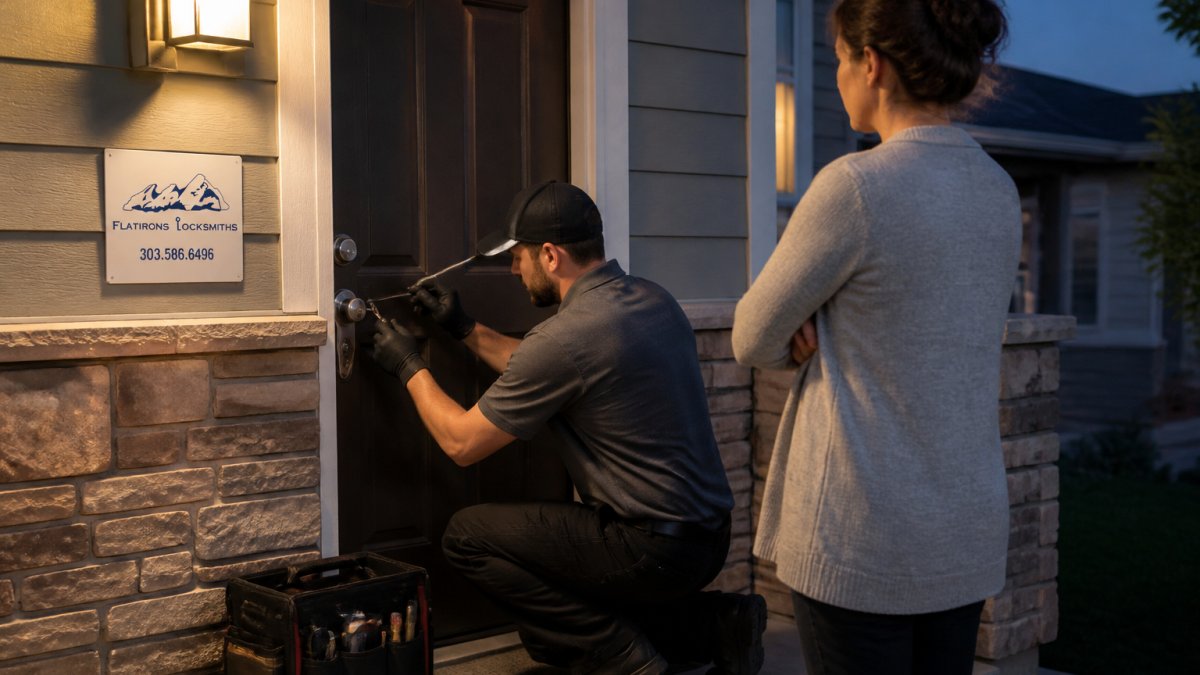
Here’s the sequence, so nothing surprises you:
- Proof of residency. Expect to show ID or something tying you to the address. A legitimate technician asks. One who doesn’t is a red flag.
- Assessment. The technician checks the lock type and picks the least invasive method.
- Entry. Most doors open in minutes without damage.
- Damage check. If drilling is unavoidable, you should be told why before it happens.
A common mistake is letting someone drill first and ask questions later. Damage-free entry should be the default, and a trained locksmith treats drilling as a last resort.
Never let a locksmith drill your lock before explaining why non-destructive entry won’t work. Drilling means replacing the lock, and that cost lands on you.
Locksmith Cost to Fix a Lock: What Drives the Price
Locksmith cost to fix a lock depends on the lock type, the time of day, the part needed, and whether the job is emergency or scheduled. There is no single number, and any shop that quotes one flat figure for every job is guessing. The useful move is to understand the line items so you can compare total costs instead of comparing service labels.
A typical invoice breaks into four parts:
- Call-out or trip fee. A flat charge to dispatch a van to your address. Standard-hours calls usually carry a lower trip fee than after-hours calls.
- Labor. Billed by the job or by time. A simple residential lockout is usually a single labor unit; a commercial access-control repair can run multiple hours.
- After-hours surcharge. An added premium for nights, weekends, and holidays. This is legitimate, the technician is giving up their evening, but it should be disclosed before dispatch, not added at the door.
- Parts. Deadbolts, cylinders, keys, fobs, and hardware. Parts pricing varies widely by grade, and a smart lock or commercial-grade hardware costs more than a standard residential deadbolt.
What moves the total price:
- Timing. After-hours and weekend calls carry a premium over standard hours.
- Service type. Emergency dispatch costs more than a booked appointment.
- Hardware. A standard deadbolt replacement costs less than a smart lock or commercial-grade hardware.
- Vehicle work. Car key replacement and key-fob programming involve specialized equipment and cost more than a home rekey.
- Access. A door behind a security gate or in a locked warehouse adds time.
How to verify a quote before you commit:
- Ask for the total in writing, text or email, before dispatch.
- Confirm whether the after-hours fee is already included or added on arrival.
- Ask whether parts are included or billed separately.
- Confirm the quote covers the full job, not just the trip fee.
- Compare the written total, not the phone greeting.
We quote upfront before work begins, and we recommend asking every locksmith for the same. If a quote arrives only after the door is open, that’s a pricing problem, not a service.
Ask for the quote in writing before dispatch, including any after-hours fee and whether parts are included. A legitimate shop will put it in a text or email. A call-center operation will dodge the question.
For a current price on your specific job, check our service pages or call for a quote.
What to Do While You Wait for an Emergency Locksmith
While you wait, secure yourself and your property, confirm the technician’s arrival window, and avoid DIY entry that could damage the door or void your insurance. The wait is usually short, but how you spend it matters.
A practical checklist:
- Move to a safe, well-lit spot if you’re locked out at night
- Confirm the arrival window and the technician’s name
- Have your ID ready for proof of residency
- Don’t force the door or window; damage costs more than the lockout
- If you’re locked out of a car, stay with the vehicle if it’s safe
- Note the quoted price so you can compare it to the invoice
If you’re locked out of a commercial building, call the property manager or security contact while you wait. Access control systems sometimes log the lockout, which helps with insurance and internal records.
How to Vet a Locksmith Before You Book
Vet a locksmith by checking credentials, asking for an upfront quote, and confirming a local physical presence. The trade has real scams, and a few questions separate the professionals from the predators.
What to check:
- Licensing and association membership. Look for membership in a professional body such as the ALOA Security Professionals Association. Flatirons Locksmiths is a member (#64049).
- Upfront pricing. A written quote before dispatch is the clearest sign of a legitimate shop.
- Local address and reviews. Check directories like Angi and Nextdoor for real customer feedback.
- Insurance. Ask whether the technician is insured against damage. A legitimate shop answers without hesitation.
- Vehicle and uniform. A marked van and identifiable technician beat an unmarked car.
A common scam is the bait-and-switch quote: a low phone price that balloons once the lock is picked. The defense is the written quote and a refusal to pay more than agreed.
The single best scam check is a written, upfront quote. It protects you from the bait-and-switch and tells you whether you’re dealing with a real local shop.
Conclusion
The difference between emergency and standard locksmith service comes down to timing, dispatch priority, and cost, not skill. Call emergency service when you can’t secure the property or get moving; book standard service for planned rekeys, installs, and upgrades. Either way, demand an upfront quote and check credentials before anyone touches your lock.
Flatirons Locksmiths has served the north metro area since 2012 with mobile service, upfront quotes, and both emergency and scheduled availability. We’re an authorized dealer for Hollon Safe Company and Emtek Lock Hardware, and we handle residential, commercial, and automotive work from the same fleet. Schedule an appointment and get a written quote before we roll a van.
Frequently Asked Questions
What is the difference between an emergency locksmith and a standard locksmith?
An emergency locksmith handles urgent lockouts and security problems outside normal business hours, often with priority dispatch and a faster response time. A standard locksmith performs scheduled work like rekeying, lock replacement, and new lock installation during regular hours. The trade skills overlap, but emergency calls carry after-hours premiums and demand faster arrival. Many full-service locksmiths, including Flatirons Locksmiths, offer both emergency and scheduled service availability.
Do emergency locksmith services cost more than standard services?
Yes, emergency service usually costs more because of after-hours labor and priority dispatch. Exact pricing depends on the lock type, time of day, and travel distance. Ask for an upfront quote before work begins so the final bill matches what you were told.
How quickly can an emergency locksmith respond?
Response time depends on your location, the time of day, and how many jobs the dispatcher has queued. Local mobile locksmiths who serve your area directly usually arrive faster than call centers that route work to subcontractors. When you call, ask for a realistic arrival window and confirm the technician is dispatched from nearby. Get the arrival estimate before you agree to the job, and keep the phone number handy until they reach your door.
Can I schedule a locksmith for a non-emergency repair?
Yes. Rekeying after a move, installing an electronic deadbolt, repairing a sticky lock, or upgrading commercial door hardware are all routine jobs you can book as a scheduled appointment. Scheduling during regular hours usually costs less than an emergency call and lets you choose a convenient time. Describe the lock problem when you book so the technician arrives with the right parts, and ask whether the visit includes a service call fee.
What should I ask a locksmith before booking?
Ask for the total price upfront, including any after-hours or service call fee. Confirm the technician is insured and can show credentials, and check whether the company is a member of a trade association such as ALOA. Ask for a realistic arrival window, whether the work is non-destructive entry, and what happens if the lock cannot be opened without damage. A legitimate locksmith answers these questions before dispatch without pressure.