
Last Updated: October 23, 2026
Quick Summary
Rekeying a single door typically takes 10 to 15 minutes of actual work. A professional locksmith usually finishes a whole-house rekey in 30 to 45 minutes for four to six locks, while a first-time DIY job often runs closer to an hour per lock. To rekey a door yourself, plan on 45 to 60 minutes for your first lock.
- A standard keyed lock in good condition with the right tools is a 10-minute job.
- First-time DIY rekeying takes 3 to 5 times longer than professional time.
- Mortise locks and rim cylinders add 10 to 20 minutes per lock.
- A 30- to 45-minute hands-on job often becomes a 60- to 90-minute appointment with travel and setup.
- Keying alike only works when locks share a compatible keyway or cylinder family.
Table of Contents
- How Long Does It Take to Rekey a Door? The Short Answer
- What Rekeying a Lock Actually Involves
- How Long Does It Take to Rekey All Locks in a House?
- Factors That Affect Rekeying Time
- Professional Locksmith vs. DIY: Time and Trade-offs
- How to Rekey a Door Lock: A Step-by-Step DIY Guide
- Rekeying vs. Changing Locks: Which Fits Your Situation?
- Cost to Rekey a Door: What Drives the Bill
- Frequently Asked Questions
How Long Does It Take to Rekey a Door? The Short Answer
Rekeying a single door typically takes 10 to 15 minutes of actual work. A professional locksmith usually finishes a whole-house rekey in 30 to 45 minutes for four to six locks, while a first-time DIY job often runs closer to an hour per lock.
A standard keyed lock, in good condition, with the right tools, is a 10-minute job. Everything that pushes past that comes down to three things: the lock, its condition, and who’s holding the tools.
What Rekeying a Lock Actually Involves
Rekeying changes the internal pins inside a lock cylinder so a new key operates it, while the existing hardware stays on the door. It is not the same as replacing a lock or changing every key in the building.
The cylinder swap in plain terms
The cylinder is the round plug inside the keyhole that turns when you insert the right key. Inside it sit small spring-loaded pins.
A rekey swaps those pins to match a new key. The old key stops working. The lock body, deadbolt, and door hardware stay put.
That’s why rekeying is faster than replacement: you’re not removing the lock, filling old screw holes, or fitting new hardware.
Ask the locksmith whether they’re rekeying the cylinder or swapping in a pre-pinned replacement cylinder. A cylinder swap is often faster on worn locks because there’s no pin work at all, just a straight exchange.
How Long Does It Take to Rekey All Locks in a House?
A whole-house rekey usually takes 30 to 45 minutes for four to six locks when a professional does the work, covering on-site labor only. Larger homes, older hardware, or keying every lock alike can push the job toward an hour or more.
Here’s a practical time estimate by lock count:
| Number of Locks | Professional Time | First-Time DIY Time |
|---|---|---|
| 1 lock | 10 to 15 minutes | 45 to 60 minutes |
| 2 to 3 locks | 20 to 30 minutes | 1.5 to 2.5 hours |
| 4 to 6 locks | 30 to 45 minutes | 3 to 5 hours |
| 7 or more locks | 45 to 90 minutes | A full day or more |
Pros get faster per lock because the steps become muscle memory. DIYers usually slow down on lock two or three, once a stubborn pin shows up.
If you’re rekeying after a move, our guide on how to rekey locks after moving walks through the sequence in more detail.
Factors That Affect Rekeying Time
Several variables decide whether your rekey takes 10 minutes or 40. The lock matters most, but condition and experience run close behind. The table below puts a rough time cost on each variable.
| Factor | Typical added time | Why it matters |
|---|---|---|
| Standard knob lock or deadbolt | Baseline (10 to 15 min per lock) | Standard pin-tumbler cylinders use common pin kits and keyways |
| Mortise lock or rim cylinder | +10 to 20 min per lock | More parts to remove, and the cylinder is often buried in the door edge |
| High-security or restricted keyway | +10 to 25 min per lock | Non-standard pins and keyways require brand-specific kits and blanks |
| Dry, gritty, or corroded cylinder | +5 to 15 min per lock | The plug must be cleaned or lubricated before new pins will seat |
| Painted-over or forced lock | +15 min or replacement | Hardware may need to be freed, drilled, or swapped entirely |
| Keying multiple locks alike | +3 to 8 min per lock | Pin stacks must be matched across cylinders so one key operates all |
| First-time DIY | 3 to 5x professional time | Tool handling, pin sorting, and test-fitting slow the process |
Lock type, condition, and skill level
- Lock type: Standard cylindrical knob locks and deadbolts rekey quickly. Mortise locks, rim cylinders, and high-security brands take longer due to non-standard pins or restricted keyways.
- Condition: A dry, gritty, corroded, painted-over, or forced cylinder adds time.
- Skill level: A locksmith rekeys hundreds of locks a year; a homeowner doing it once will be slower.
- Keying alike: Matching pin stacks across cylinders adds a few minutes per lock.
Keying multiple locks alike: compatibility limits
Keying alike only works when the locks share a compatible keyway or cylinder family. A standard Schlage cylinder and a Kwikset cylinder, for example, use different keyways, so a single key cannot operate both without swapping one set of cylinders. Before the visit, note the brand stamped on each lock face or latch plate; if brands differ, the locksmith may need to replace cylinders to bring everything onto one key, adding time and parts.
What can delay or prevent rekeying
Some jobs can’t be finished in the standard window: a seized or damaged cylinder that won’t turn, a lock with no visible brand markings, hardware that’s been drilled or tampered with, a cylinder worn past the point where new pins will hold, missing keys for a lock that needs matching, or mismatched keyways requiring cylinder swaps to key alike. In those cases, replacement is often faster than repair, and a good locksmith will say so upfront rather than bill extra hours.
Don’t force a stiff key during a rekey. If the cylinder won’t turn freely, the pins may be worn or the plug misaligned. Forcing it can bend the key or crack the cylinder housing, turning a quick rekey into a full lock replacement.
Professional Locksmith vs. DIY: Time and Trade-offs
Hiring a locksmith is faster on the clock but costs money. DIY saves the labor charge but adds hours and a real risk of a broken lock.
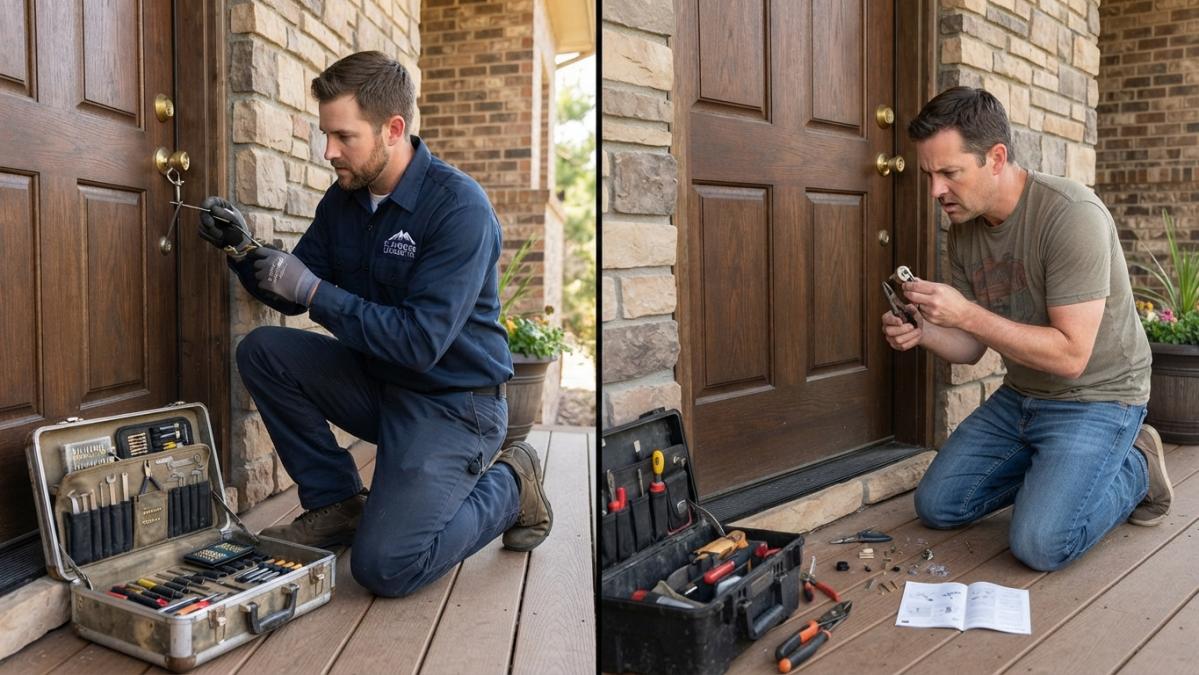
(/how-to-find-reliable-locksmiths/) cover what to check before you book.
Timing also depends on availability. If you’re locked out or need same-day service, it helps to know how emergency locksmith availability works, including what counts as a true emergency versus a scheduled visit.
How to prepare for a locksmith appointment
A few minutes of prep can shorten the visit and prevent a return trip:
- List every lock you want rekeyed, including back doors, garage entry, and outbuildings, and note the brand if visible.
- Confirm access to each door and clear the area around the hardware.
- Decide on keying alike before the visit and check whether your locks share a keyway.
- Gather existing keys so the locksmith can confirm which locks they operate.
For one or two standard locks, DIY is reasonable if you’re handy. For four or more locks, or any high-security hardware, a professional usually finishes faster and with less risk. When you book, ask for the hands-on time and the total appointment window separately.
How to Rekey a Door Lock: A Step-by-Step DIY Guide
A standard pin-tumbler lock can be rekeyed at home with a rekey kit matched to the lock brand.
What you’ll need:
- A rekey kit for your lock brand (pins, springs, follower, key)
- Screwdriver set
- Plug follower or a dowel that fits the cylinder
- The new key you want to use
Step 4: Remove the old pins and springs. Tip them onto a tray, separate from your new pins.
Step 5: Load the new pins. Match the new key to the pin stacks using the kit’s chart.
Step 7: Reinstall and check every lock. Refit the lock, then test the old key.
If any step feels off, stop.
Rekeying vs. Changing Locks: Which Fits Your Situation?
Rekeying keeps your existing hardware and changes the keys; replacing swaps the whole lock. Rekeying is faster and usually cheaper, while replacement makes sense when hardware is worn, outdated, or you want new features.
Choose rekeying when:
- The locks work fine and you just want old keys dead
- You’ve moved into a new home
- A roommate, contractor, or tenant has moved out
- You want every door on one key
Choose replacement when:
- The lock is damaged, loose, or hard to turn
- You want a different finish or style
- You’re upgrading to a smart lock or electronic deadbolt
- The hardware is builder-grade and past its useful life
If you’re leaning toward new hardware, it’s worth reading a smart lock vs traditional deadbolt security comparison before you commit. And if you’re staying with mechanical locks, our guide on how to choose residential door locks covers the specs that matter.
Rekeying fits renters, new homeowners, and anyone with sound hardware who simply needs old keys retired. Replacement fits older homes, damaged locks, and anyone planning a smart lock upgrade.
Cost to Rekey a Door: What Drives the Bill
The cost to rekey a door depends on the number of locks, the lock type, and whether the work is scheduled or emergency.
What moves the number up or down:
- Lock count: More locks means more labor, though the per-lock rate often drops on larger jobs.
- Lock type: High-security and mortise locks take longer and cost more to service.
- Timing: After-hours and emergency calls usually carry a premium.
- Keying alike: Matching several locks to one key can add a small charge.
- Condition: Seized or damaged hardware may need extra labor or replacement parts.
At Flatirons Locksmiths, we give an upfront quote before work starts, so you know the number before anyone touches a screwdriver.
Rekeying a door is a short job with a long list of variables, and the difference between a 10-minute rekey and a two-hour ordeal usually comes down to the lock and who’s working on it.
Frequently Asked Questions
How long does a locksmith take to rekey one door?
A single standard door lock typically takes 10 to 15 minutes of on-site work for an experienced locksmith. That figure covers removing the cylinder, swapping the pins, testing the new key, and reinstalling the hardware. Older or unusual locks can push it to 30 minutes. Remember that the appointment also includes travel and setup, so the total visit may run longer than the hands-on time. A straightforward front-door rekey is usually finished well under an hour from arrival.
Is it cheaper to rekey a door or replace the lock?
Rekeying usually costs less than replacing because you keep the existing hardware and only pay for labor and a new key. Replacement makes sense when the lock is damaged, outdated, or you want a different style or higher security rating. For a standard keyed lock in good condition, rekeying is the lower-cost route. Ask for an upfront quote before work begins so you can compare the two options for your specific door.
Can a locksmith rekey multiple locks to use the same key?
Yes. A locksmith can key several locks alike so one key opens all of them, provided the locks are compatible and in good working order. This is common for a whole-house rekey or a business with several exterior doors. The time added is small per lock once the first one is set up, but mismatched brands or damaged cylinders can complicate the job. Tell the locksmith your goal before the visit so they can confirm compatibility.
What can make a rekey take longer than expected?
Stripped screws, painted-over cylinders, corroded pins, or a lock that has not been serviced in years can all add time. Non-standard or antique hardware may need special parts. If the door is misaligned or the deadbolt binds, the locksmith may need to adjust the hardware before the rekey holds properly. In those cases, a job that would take 15 minutes can stretch to 30 or more. Mention any known issues when you book so the technician arrives prepared.
