
Table of Contents
- What Commercial Door Hardware Repair Services Cover
- Commercial Door Closer Repair and Maintenance
- Panic Hardware, Exit Devices, and Emergency Access
- ADA Compliance for Commercial Doors
- Door Hardware Maintenance Checklist and Prevention
- When to Repair vs. Replace Commercial Door Hardware
- Emergency Door Repair and Same-Day Service
- Frequently Asked Questions
Last Updated: September 3, 2026
What Commercial Door Hardware Repair Services Cover
Commercial door hardware repair services address the full spectrum of mechanical and electronic components that keep business entrances secure and operational. At Flatirons Locksmiths, we’ve seen firsthand how a single malfunctioning door closer or misaligned panic bar can disrupt workflow and create liability exposure for facility managers. These services typically span door closers, locks, hinges, exit devices, frame repairs, and access control systems.
The scope extends beyond simple fixes. Commercial door hardware repair includes adjustment, alignment, replacement, and preventative maintenance. A door closer that’s too tight forces occupants to struggle with entry; one that’s too loose allows doors to slam shut, creating safety hazards. Both scenarios demand professional calibration. Similarly, panic hardware must release instantly under emergency pressure while remaining secure during normal operation, a balance only trained technicians can achieve.
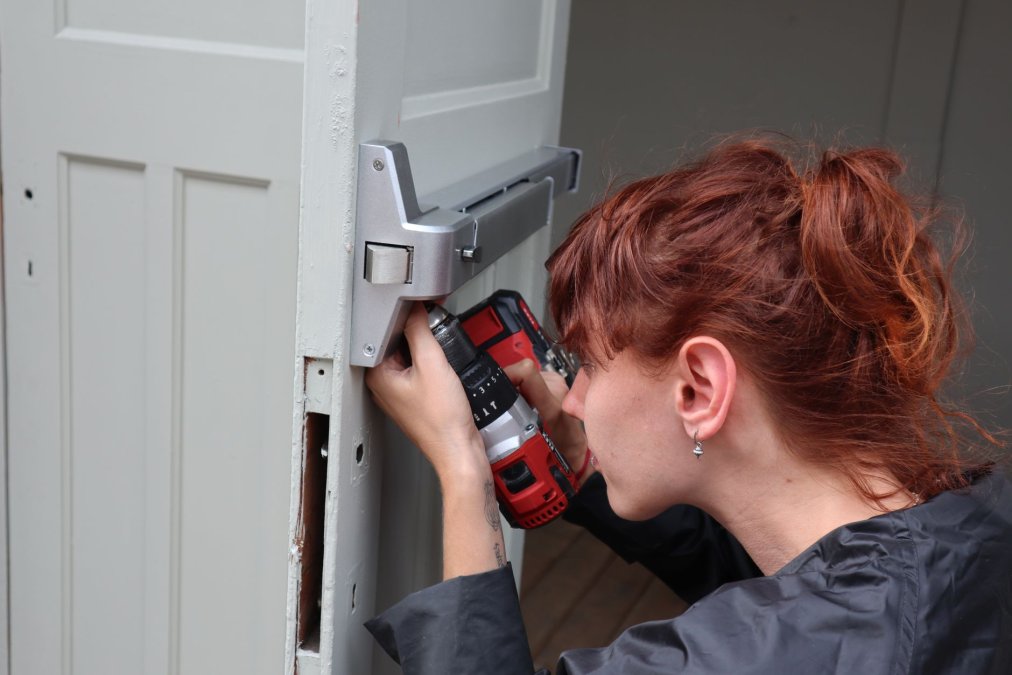
Most commercial facilities require multiple repair services simultaneously. A warehouse might need hollow metal door frame repairs, continuous hinge replacement, and door sweep installation all in the same project. A retail storefront needs glass door pivot repair, threshold adjustment, and weatherstripping maintenance. Office buildings demand electric strike repair, access control integration, and master key system updates. The complexity varies, but the underlying principle remains constant: every component must function reliably to maintain security, accessibility, and operational continuity.
Emergency situations demand rapid response. A broken door closer leaves an entrance unsecured. A jammed lock prevents occupant access. A failed exit device violates fire code. Professional commercial door hardware repair services provide same-day response capabilities, understanding that downtime directly impacts business operations and safety compliance.
Commercial Door Closer Repair and Maintenance
A door closer is a hydraulic or pneumatic device that controls how quickly a door closes after being opened. When functioning properly, it ensures smooth, controlled closure that prevents slamming while maintaining security. When it fails, doors either slam dangerously or won’t close at all, both creating liability and security vulnerabilities.
Door closer repair requires understanding both mechanical and hydraulic principles. The most common issue is improper adjustment. A closer set too tight makes the door difficult to open, especially for elderly occupants or those with mobility challenges. A closer set too loose allows the door to slam, potentially injuring occupants and damaging the door frame. Professional technicians adjust the closing speed and latching action to meet specific facility requirements and accessibility standards.
Leaking hydraulic fluid indicates internal seal failure. The closer stops functioning effectively and requires rebuilding or replacement. Corrosion on external surfaces suggests moisture infiltration, which eventually compromises internal components. Grinding or squeaking sounds during operation signal mechanical wear. These conditions worsen rapidly if ignored, eventually rendering the closer completely non-functional.
Preventative maintenance extends door closer lifespan significantly. Regular inspection catches developing problems before they cause failures. Cleaning away dirt and debris prevents corrosion. Lubrication at designated points maintains smooth operation. Most commercial facilities benefit from quarterly or semi-annual door closer inspection schedules, particularly for high-traffic entrances that cycle hundreds of times daily.
Replacement becomes necessary when repair costs approach replacement costs or when the closer design no longer meets current code requirements. Modern closers offer improved accessibility features, better weather resistance, and enhanced security integration compared to older models. Upgrading during replacement allows facilities to improve performance while restoring full functionality.
Panic Hardware, Exit Devices, and Emergency Access
Panic hardware, also called exit devices, represents one of the most critical safety components in any commercial building. These devices must release instantly when pushed during an emergency, allowing rapid evacuation. They must simultaneously resist forced entry during normal operation. This dual requirement demands precision engineering and professional installation.
Exit devices come in two primary styles: push bars (sometimes called crash bars) and push pads. Both must release the door latch instantly when pushed with moderate force. The National Fire Protection Association (NFPA) establishes strict standards for activation force and operation, ensuring that even children or individuals with limited strength can operate them during emergencies. NFPA Life Safety Code requirements for exit devices specify exact force thresholds and operational characteristics.
Common panic hardware failures include sticking mechanisms, sluggish latches, and worn strike plates. Dirt accumulation prevents smooth operation. Corrosion damages internal springs and levers. Impact damage from heavy use bends components out of alignment. Each scenario requires specific repair approaches. A sticking mechanism might need cleaning and lubrication. A bent lever requires replacement. A worn strike plate needs repositioning or replacement.
Professional installation ensures compliance with life safety codes. Improper installation, incorrect height, misaligned strike plates, or insufficient clearance, renders the device ineffective during emergencies. Building inspectors specifically examine exit device installation during code compliance inspections. Non-compliant installations can result in failed inspections and occupancy violations.
Integration with access control systems creates complexity. Modern facilities often require exit devices that integrate with electronic locks, allowing controlled access while maintaining emergency release capability. This integration demands expertise in both mechanical and electronic systems. Flatirons Locksmiths handles both mechanical panic hardware repair and electronic access control integration, ensuring your emergency systems function correctly under both routine and crisis conditions.
ADA Compliance for Commercial Doors
The Americans with Disabilities Act requires commercial doors to accommodate individuals with varying physical abilities. This requirement extends beyond simply providing wheelchair access; it encompasses door operation force, hardware accessibility, and operational reliability. ADA Accessibility Guidelines for door hardware and operation establish specific standards that facility managers must maintain.
Door opening force represents the most frequently cited compliance issue. The ADA limits the force required to open a door to five pounds for interior doors and eight pounds for exterior doors (ada.gov). A door closer set too tight exceeds these thresholds, effectively denying access to individuals with limited hand strength. Automatic door operators eliminate this concern entirely, allowing hands-free entry for wheelchair users and individuals carrying packages or assistive devices.
Hardware placement must accommodate both standing and seated users. Lever handles must be positioned between 34 and 48 inches above the floor, accessible to wheelchair users while remaining functional for standing occupants. Round knobs fail ADA compliance because they require grasping and twisting, difficult or impossible for individuals with limited hand dexterity. Professional door hardware repair includes assessing and correcting hardware placement and style to meet ADA requirements.
Door width and threshold height also fall under ADA compliance. Doorways must provide at least 32 inches of clear opening width. Thresholds must not exceed half an inch in height. Worn thresholds that have shifted or cracked may exceed acceptable height limits. Door frame repairs sometimes become necessary to ensure proper alignment and clearance.
Emergency exit routes must maintain ADA compliance. Exit devices must operate with the required force thresholds. Pathway lighting must function. Signage must remain visible and legible. A comprehensive ADA compliance assessment examines all these elements, identifying repairs and upgrades needed to maintain legal compliance. Many facilities discover compliance gaps during inspection, requiring prompt corrective action to avoid liability exposure.
Door Hardware Maintenance Checklist and Prevention
Preventative maintenance dramatically extends commercial door hardware lifespan and prevents emergency failures. A structured maintenance program catches developing problems before they impact operations or safety. The following checklist provides a framework for regular inspection and maintenance activities.
Monthly Inspection Tasks:
- Visually inspect all door closers for leaks, corrosion, or damage
- Test panic hardware operation, push bars should release instantly with moderate force
- Check door alignment, doors should close smoothly without binding or gaps
- Listen for grinding, squeaking, or unusual sounds during operation
- Verify that electronic access control systems respond properly to authorized credentials
Quarterly Maintenance Tasks:
- Clean door hardware with appropriate cleaners, avoid harsh chemicals that damage finishes
- Lubricate door closers, hinges, and pivot points with manufacturer-recommended lubricants
- Inspect weatherstripping for damage or deterioration
- Test emergency lighting associated with exit routes
- Verify that door sweeps and thresholds remain in proper alignment
Semi-Annual Assessment Tasks:
- Professional inspection of all commercial door hardware by qualified technicians
- Adjustment of door closers to ensure proper closing speed and latching action
- Inspection of frame integrity for cracks, separation, or misalignment
- Assessment of lock and latch mechanisms for wear or damage
- Review of access control system logs for unusual activity or system errors
Annual Compliance Review:
- Full ADA compliance assessment of all commercial doors
- Fire code compliance verification for exit devices and emergency egress
- Comprehensive security assessment of locks, access control, and monitoring systems
- Documentation of all maintenance activities and repairs for liability protection
- Planning for hardware replacement or upgrades based on wear patterns
Documentation matters significantly. Maintain records of all maintenance activities, repairs, and inspections. These records demonstrate due diligence in maintaining safe, compliant facilities. They also provide valuable data for identifying recurring problems, a door closer that requires adjustment every three months signals an underlying issue requiring professional evaluation.
When to Repair vs. Replace Commercial Door Hardware
The decision between repair and replacement depends on several factors: component age, repair cost, replacement cost, and long-term facility plans. A door closer that requires a hundred-dollar adjustment makes obvious sense to repair. A door closer that requires a thousand-dollar rebuild might justify replacement with a modern unit costing twelve hundred dollars.
Age provides important context. Hardware manufactured more than fifteen years ago often lacks modern security features, energy efficiency improvements, and accessibility enhancements. Repair extends life temporarily, but eventual replacement becomes inevitable. Planning replacement during scheduled maintenance prevents emergency failures that disrupt operations.
Repair cost thresholds vary by component. A lock cylinder replacement costs significantly less than rebuilding a damaged door frame. A door closer adjustment costs less than replacing the entire unit. However, when repair costs approach seventy-five percent of replacement cost, replacement typically makes better financial sense. You avoid repeat failures and gain upgraded functionality.
Compatibility issues sometimes force replacement decisions. Older door hardware uses different mounting standards than modern components. A replacement lock might not fit the existing door preparation. A new door closer might require frame modifications. Professional assessment determines whether existing hardware can be repaired or whether replacement becomes necessary.
Security upgrades often justify replacement even when repair remains technically possible. Older locks lack modern security features that resist picking and forced entry. Older access control systems lack integration with modern security monitoring. Newer hardware provides better integration with comprehensive security solutions, justifying replacement as part of facility security enhancement.
Accessibility improvements represent another replacement justification. Upgrading to lever handles, reducing door opening force, or installing automatic door operators improves accessibility while enhancing security and convenience for all occupants. These upgrades often occur during renovation or modernization projects.
Emergency Door Repair and Same-Day Service
Commercial door failures create immediate operational and safety impacts. A broken lock denies legitimate access while potentially compromising security. A failed panic device violates life safety codes. A jammed door blocks emergency egress routes. These situations demand rapid professional response.
Same-day emergency service requires local availability and stocked inventory. Flatirons Locksmiths maintains mobile service throughout the north metro Denver area, responding to emergency calls with technicians equipped to handle most common commercial door hardware failures on-site. This local presence eliminates delays waiting for regional service providers.
Emergency response protocols differ from scheduled maintenance. Technicians prioritize rapid restoration of functionality over ideal long-term solutions. A temporary repair might restore a door to operational status immediately, with permanent repair scheduled for the next business day. This approach minimizes operational disruption while ensuring safety compliance.
Manufacturing facilities, data centers, hospitals, and security-sensitive operations cannot tolerate extended downtime. Emergency service availability ensures that door hardware failures don’t cascade into broader operational problems.
Communication during emergency response sets professional service apart from casual repairs. Technicians explain what they found, what they repaired, and what long-term maintenance or upgrades they recommend. This transparency helps facility managers understand their infrastructure and plan for future improvements.
Documentation of emergency repairs supports insurance claims and liability protection. Professional service providers document what was wrong, what was done, and what remains to be addressed. This documentation protects both the facility and the service provider by creating clear records of the work performed.
Commercial door hardware repair services represent essential facility maintenance that directly impacts security, accessibility, and operational continuity. Regular maintenance prevents emergency failures. Professional repair restores functionality when problems develop. Strategic replacement upgrades aging hardware and improves overall facility security.
Flatirons Locksmiths provides comprehensive commercial door hardware repair services throughout the north metro Denver area, combining local expertise with rapid response capabilities. Our team handles everything from routine maintenance and adjustments to emergency repairs and system upgrades. We understand that your facility depends on reliable door hardware, that’s why we deliver transparent upfront pricing, professional installation, and ongoing support. Schedule your commercial door hardware assessment with Flatirons Locksmiths today to ensure your facility maintains compliance, security, and operational reliability.
Frequently Asked Questions
What’s included in commercial door hardware repair services?
Commercial door hardware repair covers diagnosis and fixes for door closers, panic bars, exit devices, locks, hinges, electric strikes, and access control systems. Technicians also address frame damage, threshold issues, and weatherstripping. A professional inspection identifies whether repair or replacement makes sense for your specific hardware and building code requirements.
How often should commercial door hardware be inspected?
Most facilities benefit from quarterly or semi-annual inspections, especially for high-traffic doors and emergency exits. Fire-rated doors and panic hardware require more frequent checks to maintain compliance. Regular maintenance catches alignment issues, worn closers, and latch problems before they create safety or security gaps. Your locksmith can recommend a schedule based on door usage and hardware age.
What are the main ADA compliance standards for commercial door hardware?
ADA compliance requires door handles operable with one hand without tight gripping, door closers adjusted to open within 3 seconds, panic bars at 34-48 inches high, and thresholds no higher than 0.25 inches. Fire-rated doors must meet both ADA and fire code requirements simultaneously. Professional installation ensures your doors meet current accessibility standards and pass inspection.
How much does commercial door hardware repair typically cost?
Repair costs depend on hardware type, extent of damage, and whether parts need replacement. A simple adjustment costs less than replacing a door closer or electric strike. Contact a local locksmith for an upfront quote before work begins. Many companies provide transparent pricing and explain whether repair or replacement offers better long-term value.
Can a locksmith repair heavy-duty commercial door closers?
Yes. Licensed locksmiths handle adjustment, cleaning, and repair of commercial door closers from major brands. They can address slow closing, noise, and improper latching. Some repairs extend hardware life; others indicate replacement is more cost-effective. A technician will assess whether repair makes sense or if a new closer meets current codes and performance needs better.
What’s the difference between residential and commercial door hardware?
Commercial hardware handles higher traffic, stricter code requirements, and security demands. Commercial doors use heavier-duty closers, Grade 1 locks, panic bars, and access control integration. Residential hardware is lighter-duty and doesn’t require emergency egress devices or ADA compliance. Commercial installations also must pass fire ratings, accessibility audits, and security assessments that residential doors don’t face.
This article was written using GrandRanker