
Table of Contents
- Emergency Car Lockout Service Cost: What You Should Pay
- Quick Comparison: Standard vs. Emergency Lockout Fees
- Automotive Lockout Service Time Estimate: How Long It Takes
- Does Insurance or Roadside Assistance Cover Lockouts?
- How to Avoid Locksmith Scams: Red Flags and Safe Choices
- Conclusion: Get a Transparent Quote Before You Commit
- Frequently Asked Questions
Last Updated: September 6, 2026
Emergency Car Lockout Service Cost: What You Should Pay
Getting locked out of your car is never convenient, but it shouldn’t empty your wallet. The emergency car lockout service cost depends on the time of day, your vehicle’s security system, and the technician’s travel distance. This guide breaks down what you should expect to pay, what drives prices up, and how to avoid predatory operators.
Most drivers are caught off guard simply because they have no baseline for comparison. A standard daytime unlock in a suburban area will generally cost less than an emergency dispatch at 2:00 AM on a holiday weekend.
Below, we’ll walk through the components of your final bill, expected wait times, and scam red flags. We’ll also cover a money-saving angle most guides miss: your insurance or roadside assistance plan may cover the whole thing.
Quick Comparison: Standard vs. Emergency Lockout Fees
The single biggest price driver is urgency. Standard lockout service, scheduled during business hours, is the most economical option. Emergency service, which requires immediate dispatch at night, on weekends, or on holidays, carries a surcharge because the technician is on call.
Here’s how the service levels typically compare across the industry:
|
Service Type |
When It Applies |
Typical Cost Impact |
Best For |
|---|---|---|---|
|
Standard Unlock |
Business hours, weekday |
Lowest base rate |
Planned key replacement or non-urgent access |
|
After-Hours Unlock |
Evenings, nights, weekends |
Moderate surcharge added |
Lockouts after 6 PM or on weekends |
|
Emergency Dispatch |
Holidays, extreme weather, immediate need |
Highest premium |
Lockouts where safety or timing is critical |
The spread between standard and emergency rates can be substantial. A provider might quote a base rate for a daytime unlock, but the same service after midnight could carry a significant additional fee. Always ask for the total price, including any after-hours surcharge, before the technician leaves the shop.
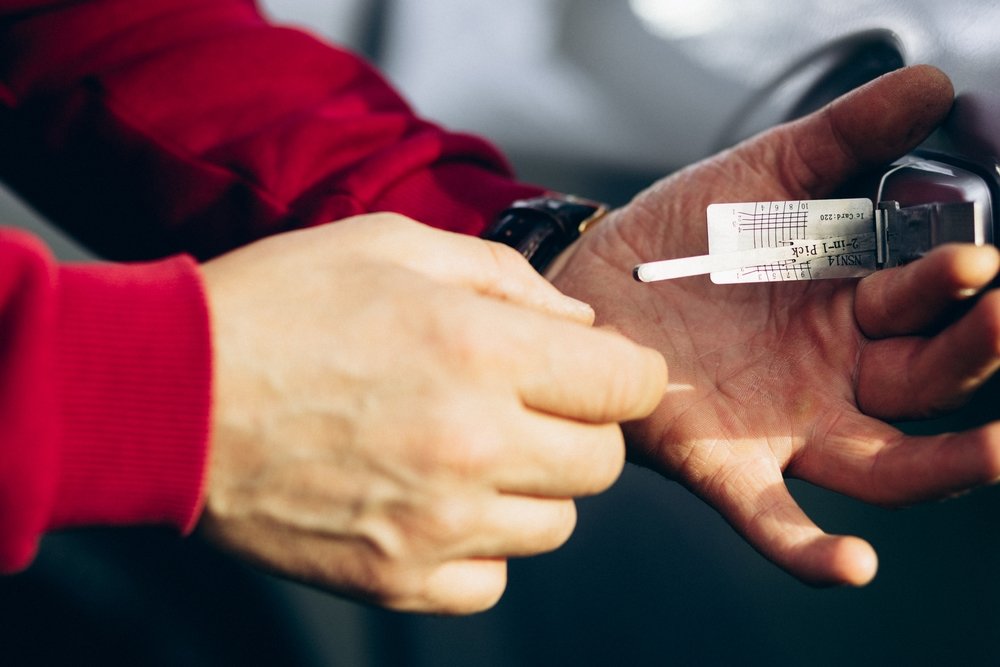
A mobile locksmith technician using a tool to gently pick the lock of the door to a car.
Key Factors Affecting Locksmith Service Fees
Several variables determine the final price, and understanding them helps you ask the right questions when you call.
Vehicle Make, Model, and Security Level
A 2005 sedan with a manual lock button is a different job than a 2026 luxury SUV with keyless entry and motion sensors. Newer vehicles often require specialized tools to avoid triggering alarms or damaging paint and weather stripping.
High-security vehicles with transponder keys or advanced electronic locks may require on-site key fob programming if the key is locked inside or lost. That service involves diagnostic equipment and is priced separately from a standard lockout.
Time of Day and Emergency Dispatch
The clock is your biggest cost variable. Most locksmiths charge a flat rate during business hours and add a premium for nights, weekends, and holidays.
Emergency dispatch also factors in response urgency. A true emergency, such as a child or pet locked in a vehicle, requires immediate priority and may command a higher rate. Be honest about your situation; if you are not in immediate danger, schedule a standard appointment and save money.
Automotive Lockout Service Time Estimate: How Long It Takes
A professional mobile locksmith should arrive within 20 to 45 minutes, depending on traffic and distance (aloa.org). Once on site, the actual unlocking procedure is fast.
For a standard vehicle, a trained technician can typically gain access in under 10 minutes using non-destructive tools like air wedges and specialized rods (aloa.org). Here is a realistic time estimate breakdown:
- Dispatch and Travel: 15-45 minutes depending on your location and traffic.
- On-Site Assessment: 1-2 minutes to inspect the vehicle and confirm the approach.
- Unlocking Procedure: 5-10 minutes for a standard vehicle with manual locks.
- High-Security Vehicles: 15-30 minutes if the vehicle has advanced electronic locking systems or if key fob programming is required.
The total time from your phone call to sitting back in the driver’s seat is usually under an hour. A reputable locksmith will give you an honest estimate when you call.
Does Insurance or Roadside Assistance Cover Lockouts?
Before you pay out of pocket, check your auto insurance policy and roadside assistance memberships. Many comprehensive policies include lockout assistance as a standard benefit. When you call the locksmith out you will pay the locksmith directly and then your insurance will reimburse you once you send them the bill.
Auto Insurance: What Your Policy Actually Says
Your auto policy may include roadside assistance as an optional rider or part of a comprehensive package, often adding just a few dollars per month. With this rider, a lockout is usually covered up to a set amount per incident, often $100 to $150 (iii.org).
Check your policy declarations page for terms like “roadside assistance,” “emergency road service,” or “towing and labor.” If you don’t see it, call your agent and ask: “Does my policy include lockout service coverage, and what is the per-incident limit?” This five-minute call can save you the entire cost of the service.
Roadside Assistance Programs: Know Your Tier
Roadside assistance programs are not all the same. Coverage depends on your membership level. Here is how major programs typically structure lockout benefits:
- AAA: The most well-known roadside assistance provider offers tiered membership levels. The basic tier provides a limited dollar amount toward locksmith services, while the higher tiers (Plus and Premier) offer increased coverage. For example, a basic member might receive up to $50 toward a lockout, while a Premier member could receive up to $150. The key detail is that AAA dispatches its own contracted locksmiths, so you need to call AAA first rather than calling a local locksmith and seeking reimbursement.
- Auto club memberships: Many auto clubs and credit unions offer roadside assistance as a member benefit. These programs often contract with national networks and provide a flat per-incident benefit. Check your membership benefits guide for the exact dollar amount.
- New car warranties: If your vehicle is still under the manufacturer’s new car warranty, check whether roadside assistance is included. Many automakers, including Toyota, Ford, and Honda, include complimentary roadside assistance for the first few years of ownership. This benefit often covers lockouts, though there may be a per-incident limit.
- Credit card benefits: Several premium credit cards, particularly those marketed for travel or everyday spending, include roadside assistance as a cardholder benefit. This is one of the least-known coverage options. Call the number on the back of your card and ask if roadside assistance is included. Some cards provide this benefit at no extra charge, while others offer it as a pay-per-use service at a discounted rate.
The Critical Question: Dispatch vs. Reimbursement
The most important distinction is whether your coverage requires you to use their dispatch service or allows you to call any locksmith and submit a receipt for reimbursement. Some programs, including AAA, require you to call their dispatch line. If you call a local locksmith directly, you will likely pay full price and may not get reimbursed.
A few programs offer reimbursement instead like many insurance providers. You pay the locksmith directly, get an itemized receipt, and submit a claim. This offers more flexibility but requires cash or credit upfront.
What Is Typically NOT Covered
Even with roadside assistance coverage, common exclusions apply:
- Key replacement or key fob programming: Most lockout coverage applies only to gaining physical access to the vehicle. If your key is lost or broken, and the technician needs to cut a new key or program a transponder, that service is almost always billed separately and may not be covered.
- Commercial vehicles: Many personal auto policies and roadside assistance programs exclude commercial vehicles, delivery vans, or vehicles modified for business use.
- Multiple incidents: Some programs limit the number of service calls per year, often to three or four. If you have already used your benefit for a tow or a jump-start, a lockout call may not be covered.
The Bottom Line on Coverage
If you have any form of roadside assistance, your lockout may be fully covered or covered up to a set limit. Call your provider first before calling a locksmith. If you have no coverage, you now know the exact out-of-pocket cost and can negotiate with confidence.
How to Avoid Locksmith Scams: Red Flags and Safe Choices
The locksmith industry has a well-documented problem with scam operations run by call centers that dispatch unvetted “technicians.” These scams advertise rock-bottom prices online and then demand inflated payment once they arrive.
The most common scam starts with a lowball phone quote. When the technician arrives, they claim the job is more complex and quote a significantly higher price. They may also demand cash and refuse to provide an itemized invoice.
Visual Checklist: Spotting a Fake Locksmith Before They Touch Your Car
Scam locksmiths follow a predictable playbook. Run through this checklist while on the phone and again when the vehicle pulls up:
- The “Google” address trap: The dispatcher gives you a street address that looks local. Search that address on a map. Scam call centers often list virtual offices, vacant lots, or residential homes in other states. A legitimate mobile locksmith will have a verifiable local shop or a registered business address.
- The generic answering service: You reach a call center that answers with a broad phrase like “locksmith services” rather than a specific company name. Ask for the legal business name and the technician’s full name. Scammers often refuse or give a fake name.
- How to know for sure if you reached a legitimate company: Always ask them where they are located, never say “Are you in my town”, as soon as you say the name of the town they can always say yes. Also, always ask for a full fixed price upfront. If they ask you for additional information such as the year, make and model of the car that is fine but if they ask for location it should be enough just to give them the name of the town upfront, not your full address. Sometimes it is possible that even with a legitimate locksmith company you will get someone who answers the phone that will not always have all the answers for you and will have to refer you to a locksmith but in most cases it should be quite simple. Flatirons Locksmiths has actually started implementing and AI answering service to handle our overflow calls so that we make sure we answer all calls, the AI does a great job of taking your information and passing it on but not very good when you ask it for information so it will refer you to a locksmith who will call back when they are able.
- The “cash only” demand: A legitimate business accepts credit cards and provides a receipt. If the technician insists on cash, says the card machine is “broken,” or offers a “discount” for cash, that is a classic scam signal. Credit card payments leave a paper trail and offer fraud protection.
- The bait-and-switch price: The technician arrives and quotes a price that is two or three times the phone estimate, claiming “unexpected difficulty.” A legitimate locksmith honors the quoted price or explains any additional fee before starting work, not after.
What to Do If You’ve Already Been Scammed
If you realize you’ve been overcharged or scammed after the fact, you still have options:
- Dispute the charge with your credit card company. If you paid by card, you can file a chargeback for services not rendered as described. This is why paying by credit card is critical.
- File a complaint with your state’s consumer protection office and the Better Business Bureau. Scam operations often cycle through business names, so your complaint helps warn others.
- Report the incident to local law enforcement if the technician used threats or intimidation to demand payment.
A legitimate locksmith will welcome questions about licensing, insurance, and pricing. Scammers rely on you being in a hurry. Taking 60 seconds to run through this checklist can save you from a $400 bill for a service that should cost a fraction of that.
Conclusion: Get a Transparent Quote Before You Commit
The emergency car lockout service cost is driven by time of day, vehicle complexity, and travel distance, but it should never be a mystery. A standard unlock during business hours is your most affordable option, while emergency dispatches at night or on holidays carry a premium. Before you pay anything, check your insurance and roadside assistance coverage.
For drivers in the north metro Denver area, Flatirons Locksmiths offers the transparency and reliability that the industry often lacks. Our local team has provided mobile automotive services since 2012, with upfront quotes provided before any work begins. We are members of the ALOA Security Professionals Association and an authorized dealer for trusted hardware brands, ensuring you get professional, insured service every time. When you are locked out, you need a quick resolution from experienced local talent. Schedule an appointment with Flatirons Locksmiths and get a clear, honest quote before we head your way.
Frequently Asked Questions
How much does emergency car lockout service cost?
Emergency car lockout service costs vary based on vehicle type, time of day, and your location. Standard daytime service in the Denver metro area often starts in the lower range, while after-hours, weekends, or holidays add a surcharge. The final price is also higher for newer vehicles with advanced security systems. Always ask for an upfront quote over the phone and confirm the total price before the technician begins work to avoid surprises.
Does insurance or roadside assistance cover car lockout costs?
Yes, many auto insurance policies and roadside assistance programs cover lockout services. Some auto insurers offer roadside assistance as an add-on that includes lockout coverage. Review your policy documents or contact your provider to confirm your specific coverage limits and any requirements, such as using an approved service provider.
Are there hidden fees when calling an emergency locksmith?
Reputable locksmiths provide transparent, up-front pricing before any work begins. Hidden fees often appear when a company quotes an unusually low base price, only to add charges upon arrival for the service call, travel distance, or after-hours surcharge. To avoid this, request a total estimate that includes all fees before you agree. A professional technician will explain the breakdown and confirm the final cost before starting the unlocking process.
How long does a professional automotive lockout service take?
A standard automotive lockout service typically takes 15 to 30 minutes once the technician arrives at your location. The time depends on the vehicle’s make and model, the complexity of the locking mechanism, and the technician’s experience. Response time to reach you varies based on your location and traffic. A professional mobile locksmith will provide an estimated arrival time and complete the unlock efficiently without damaging your vehicle.