
Table of Contents
- How Long Emergency Locksmiths Take: Urban vs. Rural Arrival Times
- Factors Affecting Locksmith Response Time
- Emergency Lockout Service Cost: What Affects Your Bill
- Emergency Locksmith 24/7 Availability: What to Expect After Hours
- How Real-Time Tracking and Communication Improve Response Times
- How to Verify a Locksmith’s Reliability Before You Call
- Frequently Asked Questions
Last Updated: September 16, 2026
How Long Emergency Locksmiths Take: Urban vs. Rural Arrival Times
Emergency locksmith response time expectations start with a simple reality: where you are matters as much as who you call. A driver locked out of a car in a dense commercial corridor often sees a technician within 30 to 45 minutes, while the same lockout on a rural road can stretch past an hour. At Flatirons Locksmiths, we’ve handled mobile dispatch across the north metro area since 2012, and the pattern holds: distance and density drive the clock more than anything else.
Typical Arrival Windows by Area Type
Urban and suburban calls benefit from shorter distances between technicians and more available mobile units. Rural calls involve longer drives and fewer professionals within range. Here’s how the windows typically break down:
- Dense urban core: 30-45 minutes under normal conditions
- Suburban areas: 30-50 minutes, depending on service radius
- Rural or outlying areas: 45-90 minutes, sometimes longer in poor weather
- Off-hours (nights, weekends, holidays): add 30-40 minutes for reduced staffing
Factors Affecting Locksmith Response Time
Several variables push that window shorter or longer, and understanding them helps you set realistic expectations before you dial.
Traffic Congestion and Time of Day
Rush hour is the single biggest wildcard. A call at 8 a.m. or 5 p.m. on a weekday can add 20 to 30 minutes compared with the same call at midday. Weekend afternoons are usually lighter. Late nights are fastest for travel but slower for dispatch, since fewer technicians are on the road.
Technician Location and Service Radius
The closer the nearest mobile service unit, the faster you’re helped. Companies that track technician location in real time can route the closest available professional, which cuts response latency considerably. A wide service radius means more coverage but longer average drives to any single call.
Emergency Lockout Service Cost: What Affects Your Bill
Emergency lockout service cost depends on when you call, where you are, and what the job requires. There’s no single flat rate across the industry, and any company quoting a firm number before seeing your situation is guessing. Pricing typically reflects:
- Time of day: Off-hours and holiday calls usually carry an after-hours surcharge.
- Distance: A longer drive to a rural address can raise the service call fee.
- Lock type: A standard residential cylinder is quicker to open than a high-security or electronic deadbolt.
- Vehicle make and model: Automotive lockouts vary widely by ignition and door design.
Does Paying More Actually Get You There Faster?
This is the question most guides dodge, and the honest answer is: sometimes, but not the way most people assume. A higher price does not automatically buy a shorter arrival window. What it buys depends on which cost lever the company is pulling.
When a premium does speed things up:
- Priority dispatch tiers. Some companies offer a paid “priority” or “next available” upgrade that moves your call ahead of non-priority jobs in the queue. This shortens the dispatch delay, not the drive time. If the nearest technician is 40 minutes away, priority status does not teleport them closer.
- Dedicated overnight staffing. A company that keeps a technician actively on the road overnight can respond faster than one running an on-call rotation where a tech has to wake up and drive in. That staffing model costs more to run, and the surcharge reflects it.
- Smaller service radius. A company that deliberately limits its coverage area can promise tighter windows because every call is close. You may pay a slightly higher base rate for the privilege of a shorter drive.
When a premium does not speed things up:
- A low quote from a broker. Call centers that subcontract to whichever technician is available often quote low to win the call, then the price climbs on arrival. The low number was never tied to a fast ETA, it was bait.
- A high quote from a distant company. Paying a premium to a company whose nearest unit is an hour away still means an hour-long wait. Price and proximity are separate variables.
Emergency Locksmith 24/7 Availability: What to Expect After Hours
Emergency locksmith 24/7 availability means a live person answers your call at any hour and a technician can be dispatched, though staffing is thinner overnight. Most reputable companies maintain on-call rotations rather than a full night crew, so your call may route to a dispatcher who then wakes the nearest available professional.
What to expect after hours:
- A real human, not an automated queue, within a minute or two
- A clear arrival estimate, usually longer than daytime
- Confirmation of any after-hours surcharge before you agree
- An updated ETA if the technician hits unexpected traffic
How Real-Time Tracking and Communication Improve Response Times
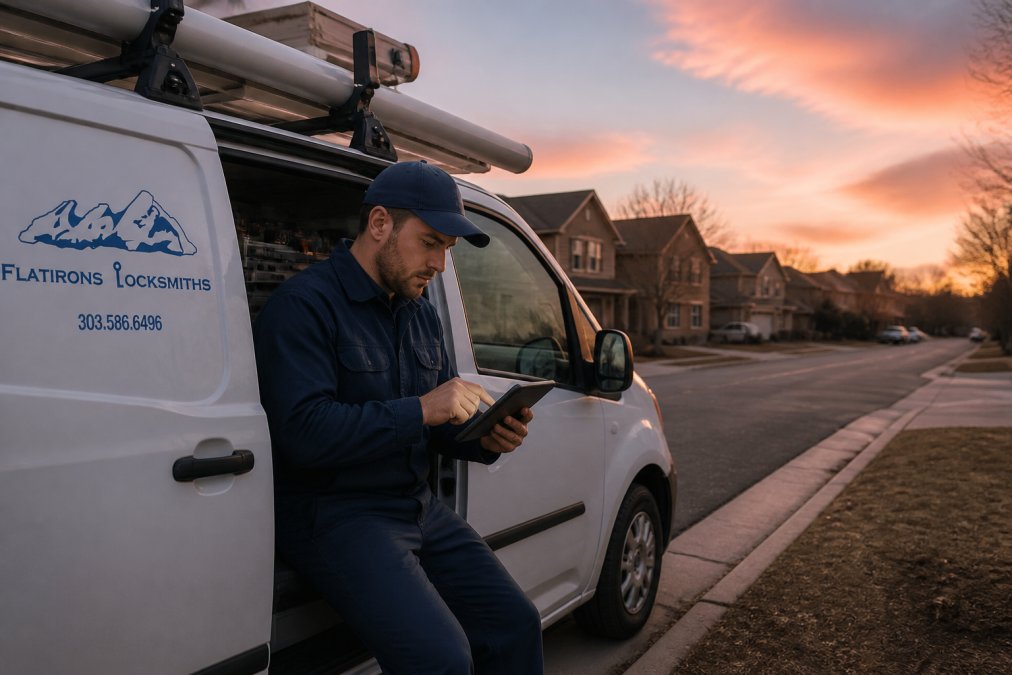
Real-time tracking and proactive communication shorten the perceived wait and reduce failed arrivals. When a dispatcher can see technician location on a map, they route the closest unit and share a live estimated time of arrival with you. But the mechanics matter more than the marketing, and understanding them lets you ask for the right things.
How Modern Dispatch Software Actually Works
Most established locksmith operations run on field-service dispatch platforms, the same category of software used by plumbing, HVAC, and roadside-assistance companies. The core features that affect your wait:
- GPS location on every vehicle. The dispatcher sees each technician as a dot on a map, not a name on a clipboard. This is what makes “closest available unit” routing possible instead of “whoever is next in the rotation.”
- Automated assignment rules. The system can be configured to auto-assign the nearest qualified technician for a given job type, which removes the human delay of a dispatcher manually calling around.
- Live ETA calculation. The platform pulls traffic data and recalculates the arrival estimate as conditions change, the same way a consumer navigation app does.
- Customer-facing tracking links. Many platforms send a text or email with a link showing the technician’s position and updated ETA, the same experience as tracking a rideshare driver.
What to Ask For When You Call
You do not need to know which software a company runs. You need to know whether they have these capabilities, and you can find out with three questions:
- “Can you text me a tracking link?” If yes, the company runs a modern dispatch platform. If the answer is “we’ll call you when he’s close,” you are dealing with a manual operation, not necessarily bad, but the ETA will be rougher.
- “What’s the technician’s current ETA, and will it update?” A live-updating ETA means the dispatcher can see the vehicle. A single fixed number means they are estimating from memory.
- “Will I get a callback when the tech is en route?” A confirmation call when the technician actually starts driving is the single most useful communication touchpoint, because it converts a vague window into a real countdown.
Why Communication Matters as Much as Raw Speed
The FTC’s consumer guidance on service scams is worth reading before any emergency call, since it explains how to spot bait-and-switch pricing and unlicensed operators.
How to Verify a Locksmith’s Reliability Before You Call
Verifying a locksmith before an emergency is the best way to avoid overpaying or risking damage to your door. Do the check now, not at 2 a.m. on the roadside.
- Confirm a physical local address, not just a call center
- Check membership in a professional association such as ALOA Security Professionals Association
- Ask whether technicians are employees or subcontracted
- Request a total price before dispatch
- Confirm the company carries insurance for damage during entry
- Read recent reviews on multiple platforms, not just one
|
Situation |
Typical Wait |
What Drives It |
|---|---|---|
|
Urban daytime lockout |
30-40 min |
Short distance, high technician availability |
|
Suburban evening |
30-60 min |
Moderate traffic, on-call staffing |
|
Rural anytime |
45-90 min |
Long service radius, fewer units |
|
Off-hours urban |
30-50 min |
Reduced staffing, light traffic |
Frequently Asked Questions
How long do emergency locksmiths typically take to arrive?
In urban areas, emergency locksmiths often arrive within 20 to 40 minutes, while rural locations may see 45 to 90 minutes due to longer travel distances. Factors like traffic, time of day, and technician availability affect these windows. When you call, ask for a specific estimated time of arrival and a callback if anything changes. Flatirons Locksmiths provides mobile service across the north metro Denver area and gives upfront quotes before work begins.
What factors influence how fast a locksmith can reach my location?
Key factors include your distance from the nearest technician, traffic congestion, time of day, and whether the locksmith is already on another call. Weather and road conditions also play a role. Urban density usually means faster response because more technicians are nearby. When you call, provide your exact address and any access details to help the dispatcher give a realistic arrival window.
How much should I expect to pay for emergency locksmith services?
Emergency lockout service cost varies based on time of day, location, and the type of lock or vehicle. After-hours calls often include a surcharge. Because pricing depends on these factors, it’s best to ask for a quote before work begins. Flatirons Locksmiths provides upfront quotes so you know the price before any work starts. For current rates, contact them directly.
Is there a standard industry response time for emergency lockouts?
No universal standard exists, but many locksmiths aim for 30 to 60 minutes in urban areas. Some companies advertise faster windows, but actual times depend on technician location and demand. When you call, ask what their typical response time is for your area and whether they offer real-time updates. Flatirons Locksmiths has served the north metro Denver area since 2012 and provides reliable emergency service.