
Table of Contents
- Why Rekeying Locks After Moving Is a Security Priority
- Rekeying vs. Replace Locks Cost: What You Actually Pay
- How Rekeying Works: The Mechanics Behind It
- Tools Needed and Step-by-Step Rekeying Process
- How Long Does It Take to Rekey a House?
- Best High Security Locks for Residential Homes
- When to Call a Professional Locksmith to Rekey Locks
- Conclusion
Last Updated: August 27, 2026
Why Rekeying Locks After Moving Is a Security Priority
Rekeying locks after moving is one of the most important security steps a new homeowner can take, and one of the most commonly skipped. The moment you accept keys at closing, you have no way of knowing how many copies exist. Previous owners, real estate agents, contractors, housekeepers, and neighbors may all hold working copies of your entry door keys.
Rekeying is the process of reconfiguring the internal pin stack inside a lock cylinder so that old keys no longer work. The lock hardware stays in place; only the internal tumblers change. This gives you full key control from day one without the cost of replacing every deadbolt and doorknob on the property.
The Cybersecurity and Infrastructure Security Agency’s home security guidance specifically identifies lock rekeying as a foundational residential security measure for new occupants. Treat rekeying as a standard part of your move-in checklist, the same way you’d change your address or set up utilities.
Rekeying vs. Replace Locks Cost: What You Actually Pay
The rekey vs. replace locks cost question is where most homeowners make their first mistake: they assume replacement is more thorough, so it must be worth the extra money. The right choice depends on the condition of your existing hardware and your security goals.
What Rekeying Costs
Rekeying is almost always the more affordable option. A professional locksmith typically charges per lock, and the total for a standard home with several entry points is significantly less than buying new hardware.
For accurate pricing on professional rekeying service, contact Flatirons Locksmiths directly for an upfront quote. Pricing varies based on the number of locks, lock type, and whether same-day service is needed.
What Full Lock Replacement Costs
Full lock replacement means pulling out the existing lock hardware entirely and installing new deadbolts, doorknobs, or handlesets. The cost includes both the hardware and labor. For a home with multiple entry doors, replacement costs can run several times higher than rekeying the same locks.
When Replacement Makes More Sense Than Rekeying
Rekeying is the right call in most move-in situations. But replacement makes more sense when:
- The existing locks are worn, damaged, or low-quality builder-grade hardware
- You want to upgrade to high-security locks with anti-pick pins or anti-drill plates
- You’re switching to a smart lock or electronic deadbolt that requires a different cylinder format
- The keyway is an uncommon or proprietary format that limits your rekeying kit options
If the hardware is solid and the only concern is key control, rekey. If the hardware itself is a security liability, replace it.
How Rekeying Works: The Mechanics Behind It
Rekeying works by replacing the key pins inside the lock cylinder so that only a new key operates the plug. The lock housing, strike plate, and all exterior hardware remain untouched.
Understanding the Pin Stack and Cylinder
Inside every pin tumbler lock is a series of pin stacks. Each stack contains a key pin on the bottom and a driver pin on top, separated by a spring. When no key is inserted, the driver pins cross the shear line between the plug and the housing, preventing rotation.
When the correct key is inserted, each key pin is pushed up by a specific amount until every pin stack aligns exactly at the shear line. The plug can then rotate a quarter-turn, retracting the bolt.
Rekeying replaces the key pins with a new set of different heights, matched to a new key. The driver pins, springs, and housing stay the same. The keyway doesn’t change, but the key that operates it does.
According to the Associated Locksmiths of America’s technical resources, pin tumbler locks remain the most common residential lock mechanism in the United States, which is why rekeying kits are widely available and well-documented.
DIY Skill Level Assessment: Should You Do This Yourself?
Rekeying is a learnable skill, but it’s not foolproof. Here’s a quick assessment:
DIY is realistic if you:
- Are comfortable with small mechanical tasks
- Have a lock that uses a common keyway (Kwikset KW1, Schlage SC1/SC4)
- Own or are willing to buy a rekeying kit specific to your lock brand
- Have patience for working with small pins and springs
Call a professional if you:
- Do not have experience rekey locks
- Have multiple lock brands on the same property
- Are working with high-security locks that have restricted keyways
- Aren’t sure what keyway your locks use
- Have a smart lock or electronic deadbolt with a proprietary cylinder
A common mistake is buying a generic rekeying kit that doesn’t match your lock’s keyway. Kwikset and Schlage kits are not interchangeable.
Tools Needed and Step-by-Step Rekeying Process
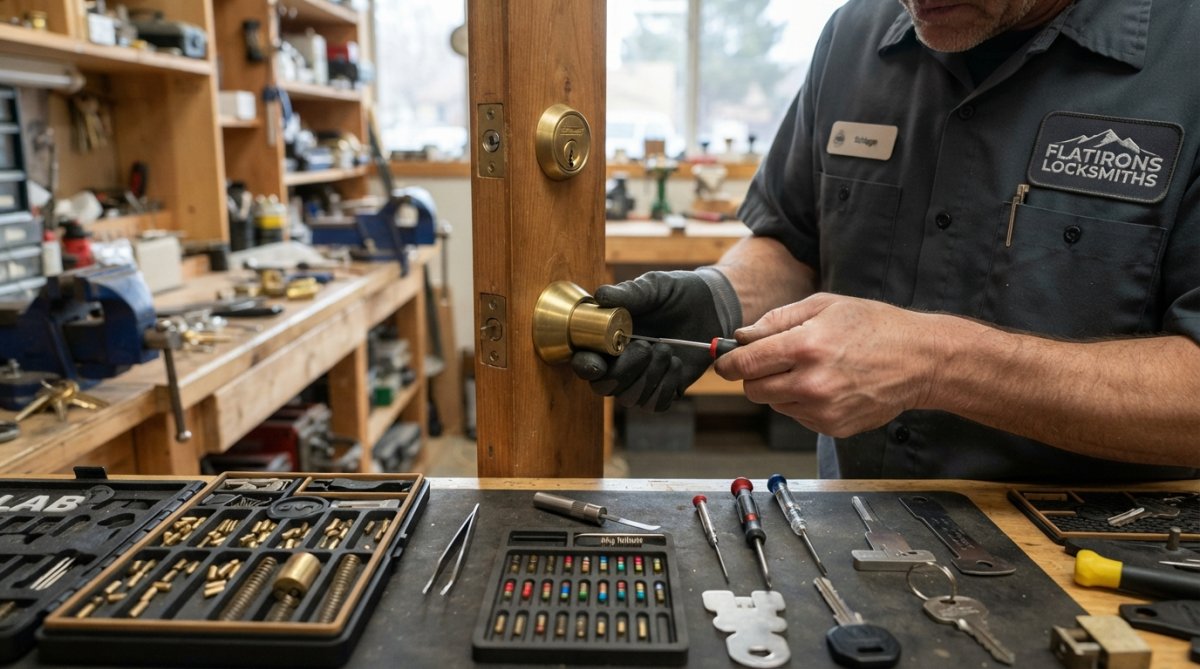
What You’ll Need
Before you start, gather the following:
- A rekeying kit matched to your lock brand (includes key pins, follower tool, plug follower, and key gauge)
- A flat-head screwdriver
- Needle-nose pliers
- The new key you want to use going forward
- A small tray or piece of tape to catch loose pins and springs
Step-by-Step Instructions
Step 1: Remove the lock from the door [Time: 5-10 minutes] Use a screwdriver to remove the deadbolt or doorknob from the entry door. Most residential locks have two screws on the interior side.
Step 2: Remove the cylinder Locate the cylinder (the round component that the key inserts into). On a deadbolt, this typically pops out after removing a retaining clip ring with needle-nose pliers.
Step 3: Insert the current working key Insert the existing key into the plug. This aligns the pin stacks at the shear line, making it possible to push the plug out without the pins scattering.
Step 4: Use the follower tool Insert the follower tool directly behind the plug as you push the plug out of the housing. The follower tool keeps the driver pins and springs compressed inside the housing while you work on the plug.
Step 5: Remove the key pins With the plug separated and the old key still inserted, use the key gauge to push out the existing key pins. They’ll drop out of the bottom of the plug.
Step 6: Insert the new key and load new key pins Insert the new key into the plug. Using the key gauge, identify the correct height key pin for each position based on the new key’s cut depths. Load the new key pins into each chamber.
Step 7: Reassemble the cylinder Slide the plug back into the housing, pushing out the follower tool as you go. The driver pins and springs will seat back on top of the new key pins.
Step 8: Reinstall and test Reattach the clip ring, reinstall the cylinder into the lock body, and mount the lock back on the door. Test with both the old key (should not turn) and the new key (should turn smoothly).
Common Mistakes to Avoid
- Mixing up pin heights: Loading key pins in the wrong order is the most common error. Use the key gauge for every position.
- Losing springs: Work over a tray. Springs are small and fast.
- Skipping the follower tool: Without it, all the driver pins will fall out of the housing the moment you remove the plug.
- Using the wrong kit: A Kwikset kit won’t work on a Schlage lock. Check the lock brand before purchasing.
How Long Does It Take to Rekey a House?
Rekeying a house takes between 20 minutes and 2 hours depending on the number of locks, lock types, and whether you’re doing it yourself or hiring a professional.
A certified locksmith can typically rekey a standard residential lock in 15-30 minutes per lock once on-site. A home with three or four entry points generally takes under an hour for an experienced technician.
DIY rekeying takes longer, especially the first time. Expect 45 minutes to an hour per lock until you’re comfortable with the process. If you have multiple lock brands, factor in additional time for separate kits.
|
Scenario |
Estimated Time |
|---|---|
|
Professional: 1 lock |
15-30 minutes |
|
Professional: Full home (3-4 locks) |
45-90 minutes |
|
DIY: First lock (learning curve) |
45-60 minutes |
|
DIY: Subsequent locks, same brand |
20-30 minutes |
|
Smart lock cylinder swap (professional) |
30-45 minutes |
Best High Security Locks for Residential Homes
Not all residential locks are equal. Builder-grade locks offer minimal resistance to picking, bumping, or forced entry. If you’re rekeying at move-in, it’s worth evaluating whether the existing hardware is worth keeping or whether an upgrade makes sense.
High-security residential locks typically feature anti-pick pins, anti-drill plates, reinforced strike plates, and restricted keyways that limit unauthorized key duplication. The ANSI/BHMA grading standards for residential door hardware classify locks by Grade 1 (highest), Grade 2, and Grade 3. Most builder-grade locks are Grade 3. For a primary entry door, Grade 1 is the appropriate specification.
Smart Lock Compatibility and Warranty Implications
Smart locks and electronic deadbolts introduce two considerations that standard rekeying guides often ignore.
First, many smart locks use a proprietary cylinder or a Z-wave/Bluetooth module that replaces the traditional key cylinder entirely. Some models accept a standard cylinder insert that can be rekeyed normally; others do not. Check the manufacturer’s documentation before assuming your smart lock can be rekeyed.
Second, DIY rekeying on a smart lock may void the manufacturer’s warranty. If the lock is under warranty and something goes wrong after a DIY rekey, the manufacturer may decline the claim. A certified professional who is an authorized dealer avoids this issue.
Master Key Systems for Multi-Family Homes
A master key system allows one key to operate multiple locks while each lock also has its own individual key. For homes with separate units, guesthouses, or properties where you want to give a contractor access to specific doors only, a master key system is worth understanding.
Setting up a master key system requires a locksmith who understands pin stack engineering. DIY master key setup is not recommended; a misconfigured system can actually reduce security by creating unintended key combinations.
When to Call a Professional Locksmith to Rekey Locks
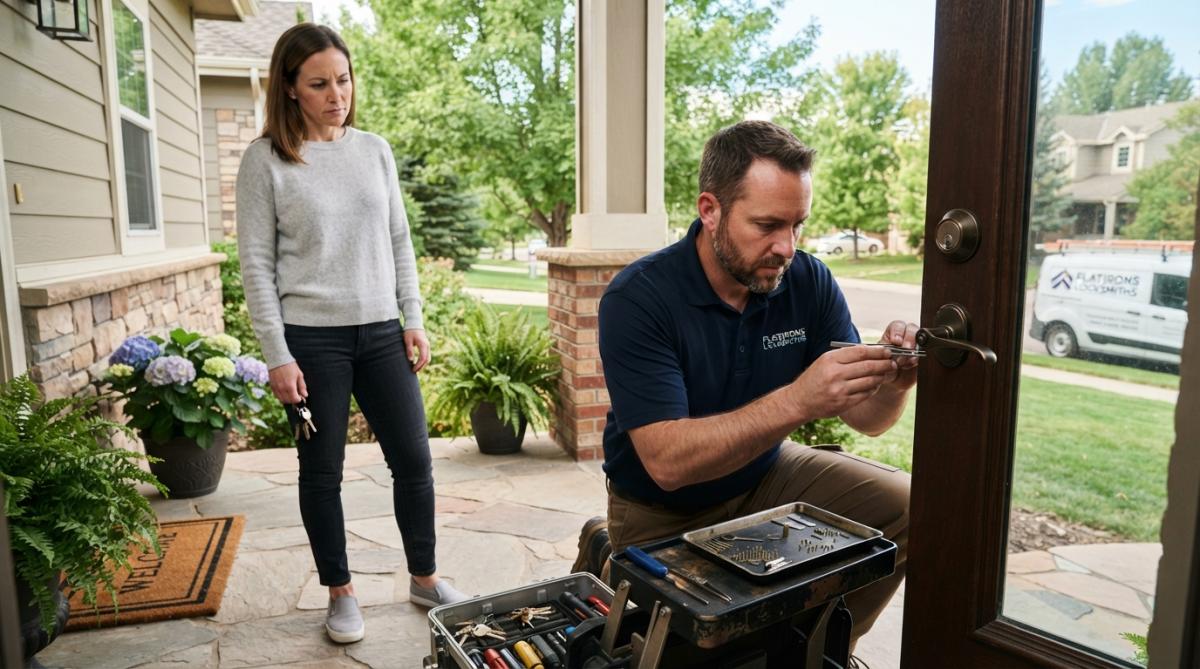
Most rekeying jobs on standard residential hardware are more than most homeowners want to take on especially if they are inexperienced. There are also many situations where calling a certified professional is the right call as you do not want to be left without a working lock at the end of the day and calling an emergency locksmith afterhours to come finish the job can be even more costly than hiring one right of the bat.
Call a professional when:
- You have high-security or restricted keyway locks. These require specific tools and expertise.
- You’re setting up a master key system. This requires engineering the pin stacks correctly across multiple locks simultaneously.
- You have multiple lock brands. A professional carries kits for all common brands and can rekey your entire home in a single visit.
- You’re not confident in the outcome. A lock that’s been incorrectly rekeyed may fail under stress or lock you out.
- Your smart lock warranty is at stake. A certified professional protects your warranty.
The ALOA Security Professionals Association’s locksmith certification program trains and certifies locksmiths in residential security, including rekeying and high-security lock installation. Hiring a member of ALOA gives you a baseline assurance of technical competency.
If you’re a new resident and want the job done right without the learning curve, schedule an appointment with Flatirons Locksmiths. We provide upfront quotes before any work begins, carry kits for all major lock brands, and can rekey your entire home in a single mobile visit.
Frequently Asked Questions
Can I rekey my locks myself?
Yes, most standard pin tumbler deadbolts and doorknob locks can be rekeyed at home using a rekeying kit sold at hardware stores. The process requires removing the cylinder, swapping out the key pins to match a new key, and reassembling the lock mechanism. That said, it demands patience and some mechanical comfort. If your locks are high-security models, smart locks, or older hardware with worn tumblers, a certified professional will get the job done faster and without risking damage to the lock housing.
Is it cheaper to rekey or change locks?
Rekeying is almost always the less expensive option. Because the existing lock hardware stays in place and only the internal key pins are replaced, you avoid paying for new deadbolts, strike plates, and installation labor. Full replacement makes financial sense when the lock is damaged, worn, or you want to upgrade to high-security or smart lock hardware. For an accurate cost comparison based on your specific doors and lock brands, request an upfront quote from a licensed locksmith before committing to either option.
How do I know if my locks can be rekeyed?
Most standard pin tumbler locks, including common deadbolts and doorknob locks, can be rekeyed. Check whether your lock has a removable cylinder and whether a rekeying kit is available for that keyway. Locks that are heavily worn, damaged, or use proprietary restricted keyways may not be compatible with standard DIY kits. A locksmith can inspect the plug and housing in minutes and tell you definitively whether rekeying is viable or whether replacement is the safer path for your residential security.
Will a hardware store rekey a lock for me?
Some large hardware stores offer rekeying services at the service desk, typically for locks purchased in that store or for common brands they stock. The process is usually quick for standard deadbolts. However, hardware store staff are not certified locksmiths, so complex locks, high-security cylinders, and smart lock compatibility issues are outside what they handle. For whole-home rekeying, key control systems, or any lock that doesn't fit a standard keyway, a licensed locksmith provides more reliable results.
This article was written using GrandRanker