
Table of Contents
- What Drives the Cost of Car Key Replacement
- Transponder Key Programming Cost: What to Expect
- Dealership vs. Locksmith: A Car Key Replacement Cost Comparison
- Mobile Automotive Locksmith Services: How They Work
- Lost Car Key Replacement Process: Step-by-Step
- Insurance and Warranty Coverage for Lost Keys
- Conclusion
Last Updated: August 26, 2026
What Drives the Cost of Car Key Replacement
Car key replacement costs vary significantly depending on two main factors: the type of key your vehicle uses and who you call to replace it. At Flatirons Locksmiths, we help drivers understand these variables so they can make informed decisions before committing to a service.
Key Type: From Basic Blades to Proximity Keys
Car keys have evolved considerably over the past three decades. A basic metal key blade is the simplest and most affordable to replace. Transponder keys add a microchip that communicates with the vehicle’s immobilizer system. Remote head keys and key fobs include wireless keyless entry components requiring programming. Proximity keys and smart keys enable push-button ignition and passive entry without removing the key from your pocket.
Each step up in technology adds cost through programming labor, diagnostic tool access, and the choice between OEM and aftermarket parts.
Vehicle Make, Model, and Year
Luxury brands and newer model years use more sophisticated immobilizer systems requiring specialized equipment. Some European vehicles require ECU reconfiguration. Domestic trucks and economy sedans from the early 2000s are generally simpler and less expensive. Older vehicles with basic key blades are most straightforward. Transponder technology became standard around the mid-1990s, with remote head keys and fobs becoming common by the mid-2000s.
Transponder Key Programming Cost: What to Expect
Transponder key programming separates simple key duplication from full car key replacement. A transponder key contains a microchip that communicates with the vehicle’s immobilizer system via radio frequency signal. Without programming, a freshly cut transponder key will turn the ignition but the engine will not start.
Programming requires a diagnostic tool that communicates with the vehicle’s immobilizer system. The labor involved is typically a significant portion of the total replacement cost, often comparable to or greater than the key blank itself.
OEM vs. Aftermarket Keys: Security Risks of Cheap Fobs
OEM keys are manufactured to exact vehicle specifications. Aftermarket keys, while cheaper, introduce real risks. Poorly manufactured aftermarket fobs may have weaker transponder signals, leading to intermittent start failures. Cheap aftermarket fobs can have inferior key blade hardness, causing premature ignition cylinder wear. In worst cases, an incompatible aftermarket key can trigger repeated failed authentication attempts, locking out all keys, including existing ones.
According to the National Locksmith Automobile Association’s technical guidance, proper key compatibility verification is essential before programming any replacement key.
Ordering a key fob online without verifying exact compatibility with your vehicle’s year, make, model, and trim level risks triggering an immobilizer lockout. Recovering the vehicle’s security system can cost substantially more than the original replacement.
Dealership vs. Locksmith: A Car Key Replacement Cost Comparison
The dealership is not your only option for car key replacement, and for most drivers, it is not the best one. Dealerships guarantee OEM parts and factory diagnostic equipment, but at a premium. A mobile automotive locksmith provides the same transponder key programming and key cutting services, often at meaningfully lower total cost.
| Factor | Dealership | Mobile Locksmith | Online DIY |
|---|---|---|---|
| Parts source | OEM guaranteed | OEM or verified aftermarket | Aftermarket, buyer-selected |
| Programming capability | Full, factory-level | Full for most vehicles | Limited; some vehicles only |
| Convenience | You go to them | They come to you | Self-service |
| Towing required (all keys lost) | Often yes | No | No |
| Typical wait time | Hours to days | Often same day | Days (shipping) |
| Relative cost | Highest | Moderate | Lowest, but with risk |
The convenience difference is significant. A dealership appointment requires scheduling days in advance and dropping the vehicle off for hours. A mobile locksmith comes to your location, your driveway, parking lot, or worksite.
Mobile vs. Shop Service: Which Saves More?
Mobile service saves more in most scenarios. If you have no working key and your vehicle is at home or in a lot, calling a mobile locksmith avoids a towing fee entirely. Towing to a dealership adds a cost that often rivals or exceeds the key replacement itself. For an all keys lost scenario, a mobile locksmith is almost always more economical than dealership towing.
Always ask for an upfront quote before any work begins. A reputable mobile locksmith will provide a firm price after confirming your vehicle’s year, make, model, and VIN. If a provider refuses to quote before arriving, treat that as a red flag.
Mobile Automotive Locksmith Services: How They Work
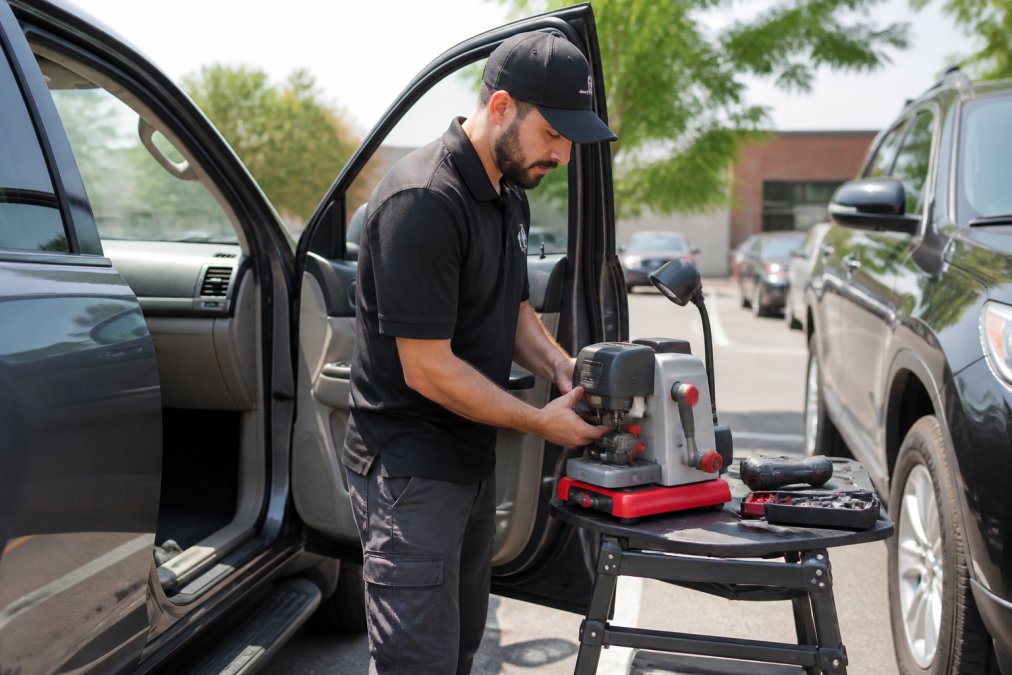
Mobile automotive locksmith services bring full key shop capability directly to your vehicle’s location. A trained technician arrives with a key cutting machine, key blanks for hundreds of vehicle makes and models, and a diagnostic tool for interfacing with immobilizer systems.
The standard transponder key replacement process follows this sequence: confirm vehicle details and proof of ownership, select the correct key blank, cut the key blade using a key cutting machine, then program the transponder chip to the vehicle’s immobilizer system. Proximity keys and smart keys also include wireless component pairing.
Flatirons Locksmiths has provided mobile automotive locksmith services since 2012, handling transponder keys, laser-cut keys, and smart keys across many vehicle makes and models. The mobile model means no towing, no waiting room, and no appointment that disrupts your day.
Lost Car Key Replacement Process: Step-by-Step
Losing all keys to a vehicle is stressful. The all keys lost scenario is more complex than standard spare key duplication because the immobilizer system has no reference key. The locksmith must perform an immobilizer reset and program entirely new keys from scratch.
Here is the step-by-step process:
- Locate your Vehicle Identification Number (VIN). The VIN is visible on the dashboard through the windshield or on the driver’s door jamb sticker. You will also find it on your vehicle registration and insurance documents.
- Gather proof of ownership. You will need your vehicle registration, title, or insurance card, along with a government-issued photo ID.
- Contact a mobile locksmith or dealership. Describe the all keys lost situation specifically, as this affects the quote, equipment needed, and time required.
- Confirm the upfront quote. Get the full price in writing before work begins, including parts and labor.
- Allow the technician to perform VIN-based key cutting. Using your VIN, a locksmith retrieves the key code from an automotive database, allowing them to cut a new key blade without an existing key.
- Key programming and immobilizer reset. The technician programs the new key to the vehicle’s immobilizer system using a diagnostic tool. Some vehicles also require ECU-level immobilizer reset.
- Test all keys before paying. Confirm that each new key starts the vehicle, operates door locks, and triggers keyless entry functions correctly.
VIN-Based Key Cutting and Proof of Ownership
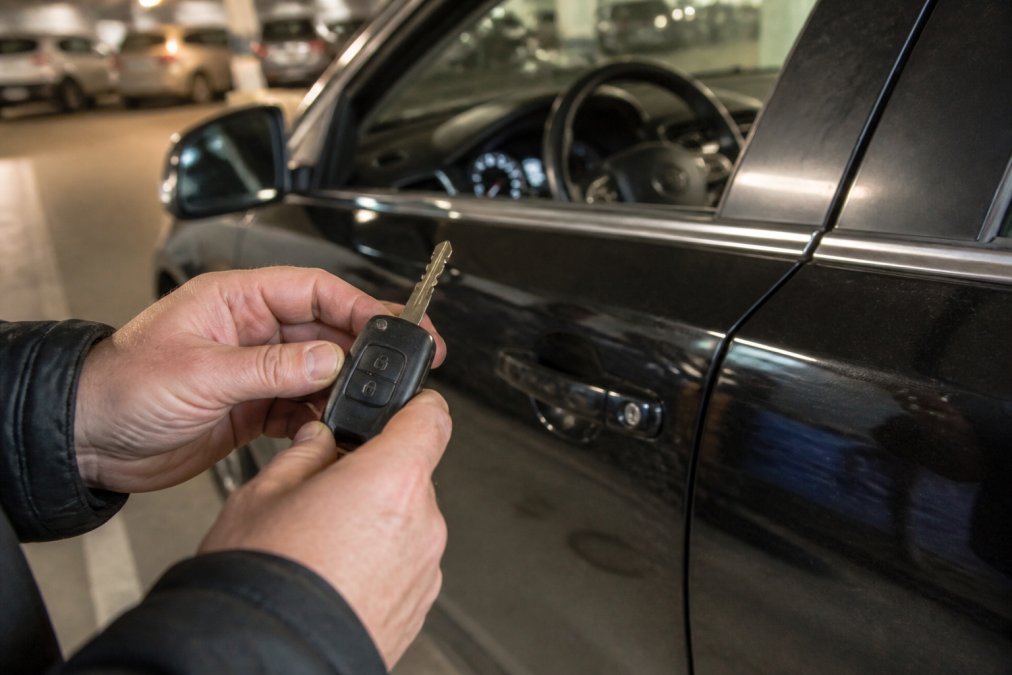
VIN-based key cutting is a capability many drivers do not know exists. Every vehicle has a factory key code associated with its VIN. A locksmith with access to an automotive key code database can retrieve that code and cut a new key blade to the correct specification, even with no existing key present.
This process makes the all keys lost scenario solvable without a tow truck. The proof of ownership requirement is a security measure. As noted in the Associated Locksmiths of America’s professional standards, verifying ownership before cutting and programming any key is a foundational ethical and legal obligation for professional locksmiths.
VIN-based key cutting means you do not need a working key to get a replacement made. Your VIN, proof of ownership, and a qualified locksmith are all you need to get back on the road.
Insurance and Warranty Coverage for Lost Keys
Many drivers do not realize their auto insurance policy or roadside assistance plan may cover some or all of the car key replacement cost. Coverage depends entirely on your specific policy and provider.
Auto insurance: Comprehensive coverage sometimes includes lost or stolen key replacement. Check with your insurer directly, and ask whether filing a claim will affect your premium.
Roadside assistance: Plans offered through auto clubs, credit cards, and vehicle manufacturers often include emergency lockout services. Some extend to key replacement, though coverage limits vary.
Vehicle manufacturer warranty: New vehicles sometimes include key replacement coverage as part of the new car warranty or a separate protection plan. Check your owner’s manual or contact the manufacturer’s customer service line.
Extended warranty and vehicle protection plans: Some aftermarket vehicle protection plans include key fob replacement. Review the terms carefully, as coverage often has a per-incident cap.
According to the Insurance Information Institute’s guidance on auto policy coverage, drivers should review their comprehensive coverage terms annually, as key replacement coverage often goes unclaimed.
Before paying out of pocket for car key replacement, spend five minutes checking your insurance card, roadside assistance membership, and vehicle warranty documentation. You may already have coverage.
| Coverage Type | Likely Covers | Check For | Action |
|---|---|---|---|
| Comprehensive auto insurance | Key replacement, sometimes programming | Deductible vs. replacement cost | Call insurer before service |
| Roadside assistance plan | Emergency lockout, sometimes key replacement | Per-incident limits | Call plan provider first |
| New vehicle manufacturer warranty | Key replacement within warranty period | Warranty terms in owner’s manual | Contact manufacturer |
| Extended vehicle protection plan | Key fob replacement up to a cap | Plan contract terms | Review plan documents |
Losing a car key is stressful, but paying more than you need to is avoidable. Flatirons Locksmiths provides mobile automotive locksmith services with upfront quotes, no surprises, and the capability to handle transponder keys, smart keys, and all keys lost scenarios for many vehicles. As a member of the ALOA Security Professionals Association, the team brings verified professional standards to every job. Schedule an appointment with Flatirons Locksmiths and get back on the road without the dealership markup or the tow truck bill.
Frequently Asked Questions
Q: Is it cheaper to go to a locksmith or a dealership for a new key?
A: An automotive locksmith is often a more affordable option for car key replacement. Dealership service departments carry higher overhead costs, which are passed on to the customer. A qualified locksmith can cut and program transponder keys, smart keys, and key fobs using professional diagnostic tools, and many offer mobile service so you avoid towing costs entirely.
Q: Can a locksmith make a key if I have lost all my keys?
A: Yes. An experienced automotive locksmith can handle the all-keys-lost scenario. Using your Vehicle Identification Number (VIN) and proof of ownership, a locksmith can cut a new key blade from scratch and use a diagnostic tool to perform an immobilizer reset, syncing the new transponder chip to your vehicle's ECU. You do not need a working spare key for this process, though it does typically take longer and may cost more than duplicating an existing key.
Q: Do I need to tow my vehicle to get a new key made?
A: Not if you use a mobile automotive locksmith service. A mobile technician brings the key cutting machine and programming equipment directly to your location, whether you are at home, at work, or stranded in a parking lot. This eliminates towing fees entirely, which can be a significant saving on top of the key replacement cost itself.
Q: What factors influence the cost of car key replacement?
A: The main factors are the type of key your vehicle uses, your vehicle's make, model, and year, and which service provider you choose. A basic metal key blade costs less than a laser-cut proximity key with a built-in transponder chip. Luxury and European vehicles often require proprietary programming equipment that raises the cost. Choosing a mobile locksmith over a dealership service department typically reduces the total bill.
Q: How long does it take to replace a modern transponder key?
A: For a standard transponder key or remote head key, a skilled automotive locksmith can typically complete cutting and programming in 30 to 60 minutes on-site. Smart keys and proximity keys with more complex immobilizer systems may take longer. The all-keys-lost scenario adds time because the locksmith must perform a full key sync and immobilizer reset rather than simply cloning an existing chip.
This article was written using GrandRanker